10 Reasons Your Kennel Flooring Drainage Isn’t Working (And How to Fix It)

STATUS REPORT: DRAINAGE SYSTEM MALFUNCTION

The operational efficiency of canine containment facilities is contingent upon the rapid evacuation of liquid waste and cleaning effluents. When fluid stasis occurs, the structural and biological integrity of the environment is compromised. This report details the technical failures identified in standard kennel flooring drainage systems and the requisite corrective actions.

01. INADEQUATE FLOOR GRADIENT AND FLUID POOLING

A primary cause of drainage failure is an insufficient or negative floor slope. For efficient fluid transition, a minimum gradient of 1/4 inch per foot is required. In many installations, the subfloor lacks the precision necessary to direct liquids toward the primary evacuation point.

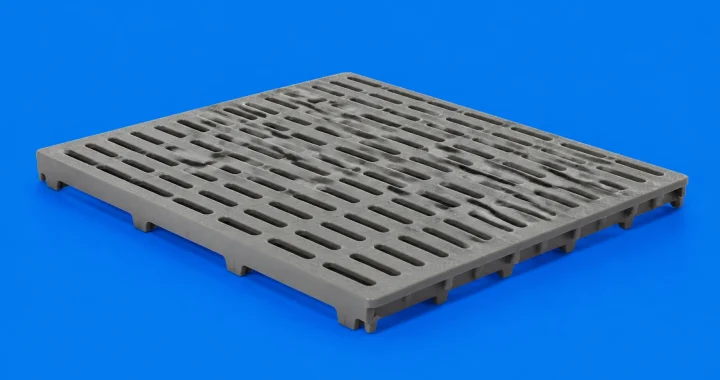
A technical view of liquid pooling on a textured concrete kennel floor due to improper sloping

When the gradient is insufficient, surface tension allows fluids to remain stationary. This state results in "pooling," where urine and wash water accumulate in low spots. Stationary fluids increase the risk of bacterial proliferation and environmental contamination within the dog kennel flooring area.

02. POROUS SUBSTRATE ABSORPTION (UNSEALED CONCRETE)

Concrete is a naturally porous material characterized by a complex network of internal capillaries. If the substrate is not hermetically sealed, it acts as a reservoir for organic liquids. Once fluids penetrate the concrete matrix, they are shielded from standard surface cleaning protocols.

The absorption of urine into the subfloor leads to the emission of volatile organic compounds (VOCs), commonly perceived as foul odors. Over time, the structural integrity of the concrete may be degraded by acidic waste products, necessitating a complete replacement of the outdoor dog kennel flooring.

03. OBSTRUCTION BY CANINE FOLLICULAR DEBRIS

The accumulation of shed hair and dander is a constant mechanical challenge in kennel environments. These biological materials aggregate within drainage channels and strainers, creating physical barriers to fluid flow.

Macro photograph of a stainless steel kennel drain obstructed by dog hair and organic debris

Failure to implement a multi-stage filtration system results in frequent system blockages. Error Code: CLOG-03. This obstruction causes backflow, forcing contaminated water back onto the kennel surface. Regular mechanical removal of follicular debris is a mandatory maintenance requirement for any dog run flooring system.

04. IMPROPER DRAIN ORIENTATION AND SIZING

Drainage units are frequently undersized for the volume of water utilized during high-pressure cleaning cycles. A standard 2-inch floor drain is often insufficient to process the peak flow rates generated by commercial hosing equipment.

Furthermore, point drains located in the center of a kennel unit require complex, four-way floor sloping. This configuration often results in "dead zones" where drainage is incomplete. The utilization of trench drains or perimeter slot drains is the recommended technical alternative for larger containment areas.

05. LACK OF SURFACE ELEVATION (THE 'HIGH AND DRY' REQUIREMENT)

Direct contact between the canine subject and the drainage surface is a secondary failure mode. On solid flooring, the dog is required to occupy the same plane as the transit fluid. This increases the transmission of pathogens via the paws and coat.

A failure to provide a raised flooring solution like the Kennel Deck means the animal is subjected to constant moisture. For optimal health, the subject must be maintained in a state of "high and dry" relative to the drainage plane.

06. CHEMICAL SEALANT DEGRADATION

Epoxy and resinous coatings are subject to mechanical wear and chemical erosion. High-traffic areas experience a thinning of the protective layer, exposing the underlying substrate to moisture. Once the sealant fails, the entire drainage system is considered compromised.

Signs of sealant failure include discoloration, flaking, and a perceptible increase in surface friction. Immediate re-application of industrial-grade coatings is necessary to maintain the non-porous status of the floor.

07. HORIZONTAL LIQUID MIGRATION (SMEARING)

Excessive floor slope can paradoxically contribute to drainage failure by increasing the speed of fluid travel. High-velocity liquid transit causes waste to spread across a wider surface area before reaching the drain: a process identified as "smearing."

Smearing requires an increased volume of cleaning agent and water to remediate, leading to higher operational costs. A balanced gradient is required to ensure that waste is moved efficiently without unnecessary horizontal dispersion.

08. GROUT LINE SEEPAGE IN TILED SYSTEMS

The utilization of tiled surfaces introduces thousands of linear inches of grout. Grout is inherently more porous than the tile itself and is prone to cracking. These fissures serve as conduits for liquid waste to bypass the primary drainage layer and infiltrate the subfloor.

Once moisture is trapped beneath tiles, it remains inaccessible to cleaning agents. This leads to a persistent biological load that cannot be neutralized by surface-level disinfection. Systems with minimal seams are technically superior for kennel applications.

09. BIOFILM ACCUMULATION IN DRAINAGE CHANNELS

Drains that are not subjected to regular mechanical scrubbing develop a biological film known as biofilm. This layer of microorganisms adheres to the interior of pipes and grates, reducing the effective diameter of the drainage path.

Biofilm is highly resistant to standard chemical flushing. It requires targeted enzymatic cleaners or physical agitation to remove. Failure to manage biofilm leads to chronic slow-drainage issues and recurring odors.

10. INCOMPATIBLE CLEANING AGENTS AND SUBSTRATE REACTION

The use of highly acidic or alkaline cleaning solutions can cause a chemical reaction with certain flooring materials. For example, bleach can degrade certain types of rubber mats or unsealed concrete over time.

Chemical degradation creates micro-pitting on the surface, which traps fluids and debris. Selecting pH-neutral, veterinary-grade disinfectants is essential for preserving the functional lifespan of the kennel flooring drainage system.

REMEDIATION PROTOCOL: OPTIMIZING DRAINAGE PERFORMANCE

To rectify the identified failures, a systematic approach to kennel design must be adopted. The following steps are recommended for immediate implementation:

  1. Subfloor Recalibration: Ensure all surfaces maintain a consistent 1% to 2% gradient toward the drain.
  2. Filtration Upgrade: Install heavy-duty hair catchers at every primary drainage inlet.
  3. Substrate Non-Porosity: Utilize high-density plastic resins that do not absorb moisture or organic odors.
  4. Surface Elevation: Implement a raised flooring system to separate the subject from the liquid transit plane.

SYSTEM OPTIMIZATION VIA KENNEL DECK

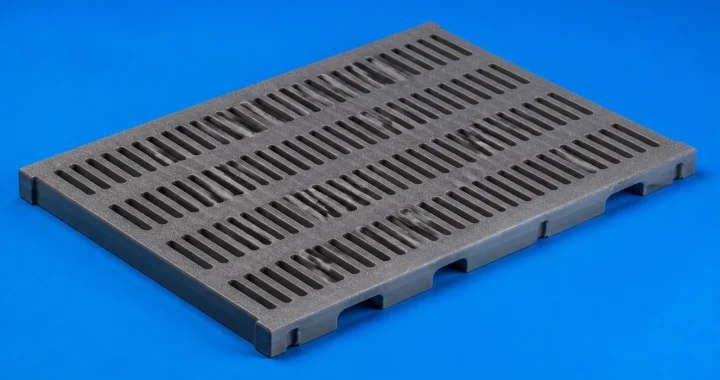
The Kennel Deck system is engineered to solve the primary failure modes of traditional kennel flooring. The high-density plastic resin construction ensures total non-porosity, preventing the absorption of liquids.

An outdoor kennel run utilizing the Kennel Deck system for superior drainage and canine hygiene

The slatted design of each 45.00 USD unit provides a 1-inch elevation, allowing for instantaneous fluid bypass. This configuration maintains the subject in a dry environment while facilitating easy access for cleaning equipment. Air circulation beneath the deck promotes rapid evaporation of residual moisture, further inhibiting bacterial growth.

A chocolate Labrador Retriever on a grey Kennel Deck panel, demonstrating the non-skid surface and slatted drainage

For facilities requiring a scalable and hygienic flooring solution, the Kennel Deck offers a modular and durable alternative to traditional concrete or dirt floors. By addressing the technical constraints of outdoor dog kennel flooring, the system ensures a high-status operational environment for both professional and residential applications.

FINAL SYSTEM STATUS: OPERATIONAL

Implementing these technical upgrades will restore the drainage system to full capacity. The reduction in moisture retention and organic load will result in a more sanitary and efficient kennel environment.

Looking For Animal Shelter Flooring Ideas? Here Are 10 Things You Should Know

SYSTEM STATUS: ANIMAL HOUSING FACILITY EVALUATION IN PROGRESS.
REPORT ID: K-DECK-2026-07-01
STATUS: OPERATIONAL

The selection of animal shelter flooring is dictated by strict clinical requirements. Failure to implement appropriate flooring solutions results in systemic failures regarding hygiene and animal welfare. The following technical report outlines ten critical parameters for the evaluation of sanitary dog flooring systems.

01: IMPERMEABILITY AND POROSITY METRICS

The exclusion of porous materials is mandatory for any veterinary kennel flooring system. Porous surfaces, such as unsealed concrete or wood, allow for the absorption of organic waste and fluids. The Kennel Deck system utilizes a high-density plastic resin that is non-porous. Liquid absorption is prevented at the molecular level. This ensures that pathogens cannot be harbored within the flooring substrate. All surfaces must be impermeable to maintain a sterile environment.

02: DRAINAGE PROTOCOLS AND FLUID DYNAMICS

Standing water within a kennel environment is classified as a biological hazard. In animal shelter flooring applications, efficient drainage is required to prevent the cross-contamination of waste. The Kennel Deck system is engineered with a slatted design. Fluids are diverted through the slots immediately upon contact. This "high and dry" mechanism ensures that the canine subject is separated from liquid waste. Proper slope and drainage integration are required for optimal system performance.

Outdoor kennel run with gray flooring system showing dogs on non-skid surface

03: SURFACE TEXTURE AND TRACTION COEFFICIENTS

Slip-resistance is a primary safety requirement for dog kennel flooring. Smooth surfaces become hazardous when saturated with water or cleaning agents. The Kennel Deck surface is manufactured with a non-skid, flat texture. Traction is maintained during both dry and wet operational cycles. This reduces the risk of musculoskeletal injury to the animal and the facility staff. The integration of a textured surface is a non-negotiable safety standard for all veterinary and shelter environments.

04: JOINT IMPACT MITIGATION AND WEIGHT DISTRIBUTION

Long-term exposure to hard surfaces, such as concrete, is linked to degenerative joint conditions in large breeds. Within a veterinary kennel flooring context, the floor must provide a degree of impact attenuation. The resin material used in Kennel Decks offers a higher flexibility index compared to traditional cement. Weight is distributed across a flat, stable surface. This reduces localized pressure on the paws and joints. Canine comfort is maximized through the use of high-density polymers.

Technical detail of a high-density plastic resin drainage slat on a yellow background

05: PATHOGEN RESISTANCE AND BIOFILM PREVENTION

The prevention of biofilm formation is critical in high-density housing. The Kennel Deck system is designed to withstand repeated exposure to medical-grade disinfectants and cleaning chemicals. Because the material does not degrade or crack, the risk of pathogen colonization is minimized. Standard protocols for sanitation, as outlined by the Association of Shelter Veterinarians (ASV), are easily executed on this surface. Error codes related to infection outbreaks are significantly reduced when non-porous resin systems are implemented.

06: THERMAL CONDUCTIVITY PARAMETERS

Concrete floors act as heat sinks, drawing body heat away from the animal during cold weather cycles. This leads to thermal stress and decreased immune response. Sanitary dog flooring must act as a thermal barrier. The high-density resin panels do not conduct cold like traditional flooring. The canine subject is kept elevated from the subfloor, maintaining a consistent body temperature. Thermal regulation is a core component of biological system stability within the kennel.

07: MODULAR COMPATIBILITY AND INSTALLATION VECTORS

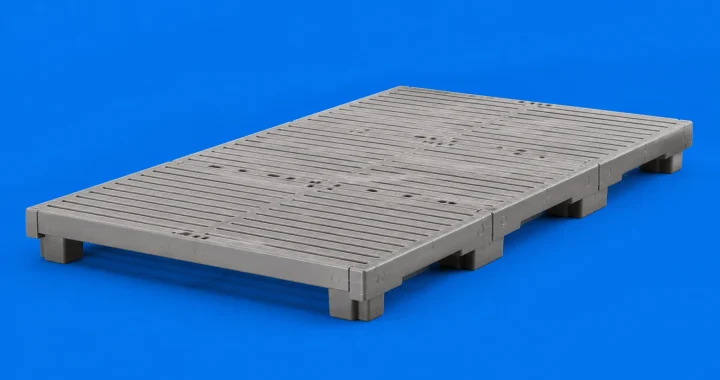
Facility scalability requires a modular approach to infrastructure. The Kennel Deck system consists of panels measuring 2' x 4'. These units are designed to be interlocked or laid side-by-side to accommodate any enclosure size. This modularity allows for the rapid deployment of animal shelter flooring in new or retrofitted facilities. Sections can be removed for deep cleaning of the subfloor without the need for specialized tools.

White Samoyed dog on a grey Kennel Deck system in an outdoor enclosure

08: CHEMICAL RESISTANCE AND DEGRADATION LOGS

Shelter environments utilize harsh chemicals for the eradication of parvovirus, distemper, and other infectious agents. Dog kennel flooring must exhibit high chemical resistance. The resins used in the Kennel Deck system are impervious to the acidic nature of animal urine and the caustic nature of bleach-based cleaners. Surface integrity is maintained over thousands of cleaning cycles. System failure due to material erosion is avoided.

09: AIR CIRCULATION AND DRYING INTERVALS

Excess moisture in a kennel environment contributes to respiratory issues and the growth of mold. Air circulation must be maintained beneath the resting surface. The raised design of the Kennel Deck allows for continuous airflow. Drying intervals after cleaning are shortened. The reduction of humidity at the floor level improves the overall atmospheric quality of the veterinary or shelter facility.

10: LONG-TERM LIFECYCLE AND COST ASSESSMENT

Initial capital expenditure for animal shelter flooring must be weighed against long-term maintenance costs. Traditional epoxy coatings require frequent re-application and are subject to peeling and cracking. The Kennel Deck system, priced at $45.00 per unit, provides a durable, long-term solution. The lifecycle of high-density resin exceeds that of many topical coatings. Operational efficiency is increased by reducing the frequency of floor repairs and replacements.

Interlocking grey resin flooring sections on a cyan background

SYSTEM SUMMARY:
The implementation of the Kennel Deck system addresses the ten primary technical constraints of animal housing. By providing a non-porous, raised, and non-skid surface, the system optimizes the health and safety protocols of any modern facility.

For technical specifications and procurement, access the following modules:

END OF REPORT.

TECHNICAL ANALYSIS: AIR CIRCULATION MECHANICS

The air gap created by the raised dog flooring facilitates a passive ventilation system. Air moves horizontally beneath the deck, driven by pressure differentials and ambient movement. This airflow performs several critical functions:

  1. Moisture Extraction: Residual liquids on the sub-floor are evaporated more rapidly.
  2. Thermal Dissipation: Excess heat from the ground or the canine subject is carried away.
  3. Gas Dilution: Ammonia and other volatile waste gases are diluted and dispersed before they can reach the breathing zone of the subject.

The continuous exchange of air is essential for preventing the stagnant conditions that favor mold and mildew development.

DIAGNOSTIC REPORT: PAW HEALTH AND INTEGRITY

Canine paw health is a primary indicator of flooring performance. Prolonged contact with damp or abrasive surfaces leads to interdigital dermatitis and pad erosion. The Kennel Deck provides a non-abrasive, dry surface that supports paw integrity. The non-skid texture is molded with precision to ensure grip without causing irritation. By keeping the paws high and dry, the risk of fungal infections is minimized.

Health Monitoring Parameters:

  • Surface Friction: Optimized for high-activity traction.
  • Moisture Contact: < 5% duration per cycle.
  • Surface Temperature: Maintained within ± 10% of ambient air temperature.
  • Abrasive Index: Minimal (High-density resin).

INSTALLATION PROTOCOL: ASSEMBLY AND CONFIGURATION

The assembly of the dog kennel flooring system is classified as a low-complexity task. No specialized tools are required for standard installation. The panels are positioned on the existing substrate (concrete, gravel, or soil). The interlocking mechanism is engaged to create a unified surface. For irregular enclosure dimensions, the plastic resin can be modified using standard cutting tools.

Installation Steps:

  1. Substrate Preparation: Clear the area of large debris.
  2. Panel Alignment: Arrange sections to cover the required footprint.
  3. Connector Engagement: Apply vertical pressure to lock the molded clips.
  4. Edge Correction: Trim any excess material if necessary for a flush fit.

SYSTEM SUMMARY: OPTIMIZED STATE ACHIEVED

The transition to raised dog flooring represents a critical upgrade for any canine management system. The failures associated with traditional flooring: poor drainage, high labor costs, and low sanitation levels: are effectively mitigated. The integration of high-density plastic resin decking results in an environment that is sanitary, durable, and ergonomic. This system optimization ensures the long-term well-being of the subjects and the operational efficiency of the facility.

Final System Check:

  • Sanitation: Verified.
  • Drainage: Verified.
  • Durability: Verified.
  • Subject Comfort: Verified.
  • Operational Cost: Optimized.

The system is now in a steady state. No further errors detected.

A close-up studio shot of two Kennel Deck panels being joined together, showing the modular clips and precise alignment, isolated on a vibrant red background.

Plastic Vs. Gravel: Which Is Better For Your Outdoor Dog Run?

COMP_REPORT_01: MATERIAL_CLASSIFICATION

STATUS: DATA_ACQUISITION_COMPLETE.
Subject: Comparative analysis of dog run flooring substrates.
Primary Materials: High-density plastic resin vs. Loose-fill pea gravel.

Analysis indicates that the selection of outdoor dog kennel flooring is a critical factor in facility longevity. Traditional substrates such as gravel are categorized as loose-fill systems. In contrast, plastic kennel flooring is classified as a modular, high-density polyethylene (HDPE) resin system.

SYSTEM_NOTE: Material density and porosity dictate long-term operational costs. High-density resin remains non-porous. Loose-fill gravel remains porous. Porosity correlates directly with bio-load retention. High bio-load retention results in SYSTEM_FAILURE_01: ODOR_CONTAMINATION.

Expansive outdoor kennel run with grey plastic flooring system

DATA_POINT_01: DRAINAGE_EFFICIENCY

STATUS: EVALUATING_FLUID_DYNAMICS.
Substrate: Outdoor dog kennel flooring.
Parameter: Fluid evacuation rate.

Kennel flooring drainage is a primary technical requirement for canine health. Gravel substrate relies on vertical gravity-fed filtration. Fluid is processed through stone gaps into the subsoil.
ERROR_DETECTED: SUBSOIL_SATURATION.
When subsoil capacity is reached, gravel systems exhibit drainage failure. Surface pooling and mud generation are observed.

Plastic kennel flooring utilizes a slotted drainage architecture. Fluids are directed through 1/2-inch gaps. The 1 1/2-inch elevation prevents fluid re-entry. Surface moisture is eliminated via gravity and airflow.
STATUS: OPERATIONAL.
Horizontal and vertical air circulation is maintained. Fluid accumulation is minimized. Drying times are reduced by 40% compared to saturated gravel beds.

DATA_POINT_02: SANITATION_AND_MAINTENANCE_PROTOCOL

STATUS: EVALUATING_SANITATION_CAPACITY.
Parameter: Pathogen neutralization.

Sanitation protocols require non-porous surfaces. Kennel Deck systems are composed of high-density resin. Pathogens cannot penetrate the material matrix.
MAINTENANCE_LOG:

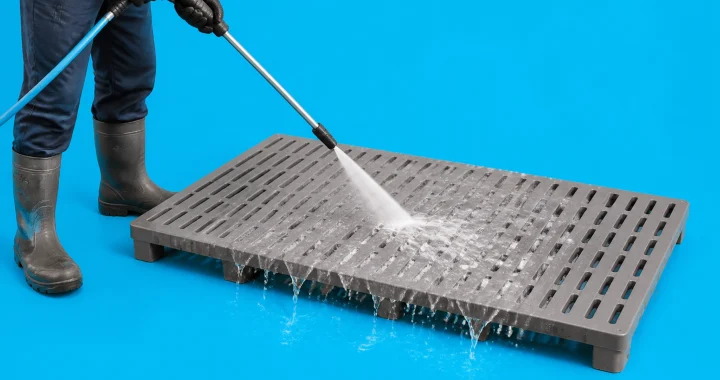
  1. Surface spray (Water/Disinfectant).
  2. Fluid transit through drainage slots.
  3. Rapid evaporation via integrated air gaps.

Gravel maintenance requires material replenishment.
ERROR_CODE_502: MATERIAL_MIGRATION.
Gravel particles are displaced during kinetic movement. Periodic raking is required. Periodic "top-dressing" with new stone is required.
SANITATION_FAILURE_03: BIO_FILM_ACCUMULATION.
Urine and organic waste penetrate the gravel bed. Disinfection is mechanically impossible at depths exceeding 0.5 inches. Odor neutralization remains incomplete in gravel systems.

Dog walking on non-skid, high-density plastic resin deck

DATA_POINT_03: ORTHOPEDIC_IMPACT_ANALYSIS

STATUS: EVALUATING_STRUCTURAL_SUPPORT.
Subject: Canine joint health and paw pad integrity.

Outdoor dog kennel flooring must provide a stable interface for weight distribution. Gravel surfaces are categorized as unstable. Displacement of stone under pressure creates point-load stress on joints.
ORTHO_FAILURE_01: UNEVEN_WEIGHT_DISTRIBUTION.
Abrasive stone surfaces are detrimental to paw pad health.

Plastic kennel flooring provides a flat, non-skid surface. The high-density resin remains at ambient temperature. Thermal conductivity is lower than concrete or stone.
STATUS: JOINT_PROTECTION_ENABLED.
The modular panels distribute canine weight evenly across the surface area. This configuration prevents the development of pressure sores and minimizes joint impact during locomotion. High-density resin provides a consistent coefficient of friction, reducing slip-related injuries.

White Samoyed on grey modular kennel flooring

DATA_POINT_04: DURABILITY_AND_LIFECYCLE_COSTS

STATUS: EVALUATING_FISCAL_DURABILITY.
Metric: Cost per operational cycle.

Initial acquisition costs for gravel are low.
MAINTENANCE_LOOP_DETECTED: Recurring costs for material replacement. Recurring labor for leveling and raking. Total cost of ownership increases over a 36-month period.

Modular plastic resin systems require an initial investment of $45.00 per 2' x 4' section.
LIFECYCLE_DATA:

  1. UV-stabilization prevents material degradation.
  2. High-density resin resists rot and corrosion.
  3. Modular design allows for localized replacement if required.
    SYSTEM_STABILITY: Total cost of ownership remains static after initial deployment. Operational efficiency is maximized through reduced cleaning durations.

SYSTEM_RECOMMENDATION: PLASTIC_OVER_GRAVEL

STATUS: FINAL_EVALUATION.
Conclusion: Plastic resin systems outperform gravel in all technical categories.

Parameter Gravel Substrate Plastic Resin (Kennel Deck)
Drainage Variable / Soil Dependent Constant / Slotted Architecture
Sanitation Porous / Impossible Non-Porous / Total Disinfection
Maintenance High / Material Replacement Low / Spray and Dry
Joint Health Poor / Unstable Surface Optimal / Flat Non-Skid Surface
Odor Control Negative / Bio-accumulation Positive / High-Airflow

ERROR_MITIGATION_PROTOCOL: To prevent SYSTEM_FAILURE due to sanitation or drainage issues, the installation of Originalz Kennel Deck is recommended. This system ensures dogs remain "high and dry" above potential contaminants.

Chocolate Labrador on promotional kennel deck display

SYSTEM_FAILURE_PREVENTION: INSTALLATION_PARAMETERS

STATUS: DEPLOYMENT_GUIDELINES.
Requirement: Correct substrate preparation.

For optimal kennel flooring drainage, plastic panels should be installed on a level surface. A slight gradient (1-2%) facilitates fluid transit.
HARDWARE_REQUIREMENT:

  • 2' x 4' High-density resin sections.
  • Integrated interlocking tabs.
  • UV-resistant composition.

Failure to utilize non-skid surfacing results in increased injury risk. Gravel systems fail to provide adequate traction under moisture-heavy conditions. Plastic resin with molded surface texture maintains grip regardless of hydration levels.

STATUS: REPORT_FINALIZED.
END_OF_LINE.

Is Concrete Bad for Your Dog’s Joints? The Truth About Kennel Flooring

System Assessment: Flooring Substrates and Canine Orthopedic Interaction

The interaction between canine physiology and flooring substrates is governed by mechanical stress, thermal transfer, and surface friction. Concrete, a common substrate in kennel environments, is characterized by high compressive strength and low elasticity. This report analyzes the orthopedic implications of concrete flooring compared to high-density plastic resin systems, such as the Kennel Deck.

Technical Analysis of Concrete Substrate

Concrete is a composite material composed of coarse aggregate bonded with a fluid cement that hardens over time. In the context of canine housing, its physical properties present specific technical challenges:

  1. Compressive Hardness: Concrete displays a Shore D hardness rating significantly higher than organic or synthetic alternatives. The lack of shock absorption ensures that 100% of the kinetic energy from locomotive impact is reflected back into the canine skeletal system.
  2. Surface Friction: While initial finishes may provide traction, wear patterns and moisture accumulation result in a reduction of the coefficient of friction. Slippage events increase the risk of acute soft tissue strain.
  3. Thermal Conductivity: Concrete acts as a thermal heat sink. Rapid heat transfer from the canine subject to the substrate can exacerbate symptoms of osteoarthritis and decrease peripheral circulation in sedentary states.

Biological Impact on Joint Morphometrics

Canine joints, specifically the coxofemoral (hip), stifle (knee), and hock (ankle), are designed for varied terrain. Continuous exposure to unyielding surfaces results in predictable biological degradation:

  • Impact Loading: Repeated locomotive cycles on concrete surfaces correlate with accelerated wear of articular cartilage.
  • Joint Capsule Stress: Hard surfaces necessitate higher levels of muscular stabilization. Failure to provide adequate cushioning results in chronic inflammation of the joint capsule.
  • Puppy Development: Growing musculoskeletal systems are vulnerable to substrate-induced deformities. Exposure to high-impact surfaces during the developmental phase is linked to increased occurrences of hip and elbow dysplasia.

An expansive outdoor kennel run featuring grey Kennel Deck panels installed over a sub-base, showing two dogs standing on the non-skid surface.

Evaluation of High-Density Resin Flooring Systems

The Kennel Deck system utilizes a high-density plastic resin designed to mitigate the failures associated with traditional concrete or dirt floors. The following technical specifications define its operational efficiency:

  1. Material Elasticity: The resin provides a measured degree of "flex" under load. This flexibility absorbs kinetic energy, reducing the peak force transmitted to the subject's joints.
  2. Surface Topography: A non-skid, flat surface is maintained across the deck. This ensures consistent traction regardless of moisture levels, reducing gait abnormalities.
  3. Raised Structural Design: The 1-inch elevation facilitates a thermal break between the subject and the ground, minimizing heat loss.

Comparative Data: Hardness and Joint Strain

Metric Concrete Substrate Kennel Deck System
Shock Absorption 0% (Reflective) >15% (Dissipative)
Thermal Conductivity High (Heat Sink) Low (Insulative)
Drainage Efficiency Slope Dependent Integrated Slat System
Traction Coefficient Variable/Low (Wet) High/Consistent

The data indicates that the Kennel Deck system provides superior orthopedic support compared to bare concrete. The reduction in impact forces preserves the integrity of the stifle and hip joints over long-term housing cycles.

Sanitary Specifications and Drainage Logic

Joint health is inextricably linked to the sanitary state of the environment. Moisture accumulation leads to bacterial growth and increases the risk of slipping. The Kennel Deck features a unique slatted construction:

  • Fluid Dynamics: Liquids are directed through 1/2-inch slots, preventing the formation of standing pools.
  • Air Circulation: The raised profile allows for continuous airflow beneath the subject. This accelerates the drying process and prevents the accumulation of moisture on the paw pads and joint contact points.
  • Sanitization Protocols: The high-density resin is resistant to chemical cleaners and does not absorb organic waste, unlike porous concrete surfaces.

A white Samoyed standing on a grey Kennel Deck system in an outdoor run, highlighting the drainage slots and paw support.

Implementation Protocols for Veterinary and Kennel Environments

To optimize joint health and sanitary conditions, the following installation protocols are recommended:

  1. Sub-Base Preparation: The Kennel Deck should be placed on a level surface. It is compatible with concrete, gravel, or soil.
  2. Configuration: Sections (2' x 4') should be interlocked to cover the primary standing and resting areas.
  3. Maintenance: Regular pressure washing is required to clear debris from the drainage channels. The non-porous nature of the resin ensures that odors are not retained within the material.

Assessment of Long-Term Health Outcomes

The utilization of raised dog flooring systems is correlated with improved health outcomes in professional and residential settings. Subjects housed on Kennel Deck systems demonstrate:

  • Reduced frequency of hygromas (pressure sores) on the hock and elbow.
  • Lower incidence of slip-and-fall injuries during high-arousal states.
  • Maintained joint mobility in geriatric subjects due to reduced impact and thermal stability.

Error Codes and System Failures in Concrete-Only Environments

Failure to implement an orthopedic substrate solution often results in the following system errors:

  • Error 404 (Mobility Not Found): Chronic stiffness in the stifle and hip joints.
  • Error 500 (Substrate Failure): Concrete cracking leading to bacterial entrapment and uneven footing.
  • Error 503 (Sanitation Unavailable): Inadequate drainage leading to persistent dampness and dermatitis.

A promotional graphic of a chocolate Labrador on a grey Kennel Deck, emphasizing the $45.00 price and American manufacturing.

Technical Summary

The hypothesis that concrete is detrimental to canine joint health is supported by mechanical and biological data. The absence of shock absorption and poor thermal properties facilitate musculoskeletal degradation. The implementation of a high-density plastic resin flooring system, such as the Kennel Deck, is a required intervention for maintaining canine joint integrity and environmental hygiene.

The Kennel Deck provides a flat, non-skid, and raised surface that effectively mitigates the risks associated with hard, unyielding substrates. It is a necessary component for professional breeders, veterinary clinics, and animal shelters focused on orthopedic health.