Plastic vs. Rubber: Which Is Better For Your Dog Kennel Flooring?

SYSTEM STATUS: MATERIAL EVALUATION REPORT 2026-07-13

This document serves as a technical comparative analysis of polymer-based flooring solutions for canine enclosures. The evaluation is categorized by material performance metrics including porosity, drainage efficiency, structural stability, and thermal conductivity. Data suggests a critical failure in traditional rubber substrates when compared to high-density plastic resin systems.


SECTION 1: POROSITY AND MICROBIAL ACCUMULATION

The sanitation efficacy of kennel flooring is dictated by the surface porosity of the material. Analysis of recycled rubber matting indicates a significant susceptibility to microbial colonization.

1.1 RUBBER SUBSTRATE FAILURE (ERR: ORGANIC RETENTION)

Rubber mats, often derived from recycled tire crumb, exhibit micro-fissures and surface irregularities. Under high-use conditions, these fissures serve as reservoirs for organic waste, including urea and fecal matter. Passive absorption is observed over time, leading to a state of permanent odor retention.

Technical data indicates that as rubber ages, the bonding agents within the material degrade. This results in "pitting," where bacteria such as E. coli and Salmonella can proliferate despite the application of standard topical disinfectants. The removal of biological hazards from a rubber substrate is frequently incomplete, leading to a "Failed Sanitation" status in professional clinical environments.

1.2 PLASTIC RESIN PERFORMANCE (STATUS: NOMINAL)

The Kennel Deck system utilizes a high-density plastic resin that is classified as non-porous. Liquid saturation is mathematically impossible at standard atmospheric pressures. The surface is engineered to resist chemical bonding with organic waste.

When cleaning protocols are initiated, the high-density resin allows for 100% surface contact with antimicrobial agents. No sub-surface penetration is detected. The material remains inert when exposed to acidic urea, preventing the chemical staining and degradation common in lower-grade plastic or rubber alternatives.

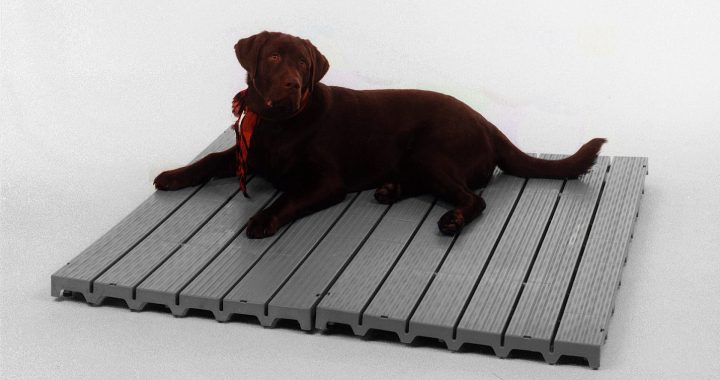
A chocolate Labrador resting on a non-porous grey Kennel Deck system.


SECTION 2: FLUID DYNAMICS AND DRAINAGE EFFICIENCY

Fluid management is the primary factor in maintaining the "High and Dry" operational state required for canine health.

2.1 FLAT-SURFACE LIQUID STAGNATION

Rubber flooring is typically manufactured as a solid, flat-surface sheet or interlocking tile. In this configuration, liquid waste remains on the primary contact surface until manual intervention occurs.

  • Error Code 402: Surface Puddling.
  • Impact: Prolonged exposure to moisture leads to interdigital dermatitis and coat matting in the canine subject.
  • Result: System inefficiency in waste removal.

The requirement for a secondary drainage slope in the concrete subfloor is mandatory for rubber installations, yet liquid tension often prevents complete evacuation, leaving a film of contaminated moisture on the floor.

2.2 INTEGRATED DRAINAGE SLOTTING

The Kennel Deck configuration is optimized for vertical fluid transfer. The system features a slatted design that utilizes gravity to move liquids away from the contact surface instantaneously.

Technical view of high-density plastic resin drainage slots.

The architecture of the deck provides a 1-inch elevation from the subfloor. This elevation facilitates:

  1. Immediate Liquid Evacuation: Waste passes through the slots into the drainage channel below.
  2. Multidirectional Airflow: Continuous circulation is maintained under the dog, preventing the formation of mold and mildew on the underside of the flooring.
  3. Self-Cleaning Capacity: During hosing procedures, debris is flushed through the slots rather than being pushed across the surface.

SECTION 3: STRUCTURAL INTEGRITY AND DURABILITY

Mechanical stress tests differentiate the long-term viability of plastic resin versus rubber.

3.1 RUBBER DEGRADATION: CURLING AND TEARING

Rubber mats are subject to thermal expansion and contraction. Over a 24-month cycle, the edges of rubber mats frequently exhibit "Curling Syndrome." This occurs when the edges lift away from the subfloor, creating a significant trip hazard for both human operators and canine subjects.

Furthermore, rubber is susceptible to "Destructive Chewing Interference." Canines can exert enough pressure to tear sections of the rubber, which may lead to ingestion hazards. Once the structural seal of a rubber mat is broken, the internal core is exposed to rapid rot.

3.2 RESIN STABILITY (STATUS: REINFORCED)

The high-density plastic resin used in professional kennel decks is UV-stabilized and chemically resistant. It does not warp under standard temperature fluctuations (-40°F to 120°F).

The panels are engineered with a flat, non-skid surface that provides traction without compromising the integrity of the material. Unlike rubber, the resin does not "flake" or produce "black dust" (carbon black) which can stain the dog's coat and paws.

Expansive outdoor kennel run utilizing the grey Kennel Deck flooring system for maximum durability.


SECTION 4: THERMAL CONDUCTIVITY AND CANINE COMFORT

A clinical assessment of thermal transfer is required to ensure the biological stability of the occupant.

4.1 THERMAL SINKING IN CONCRETE AND RUBBER

Concrete floors act as a thermal sink, drawing body heat away from the dog. While rubber provides minimal insulation, it does not provide the "Air Gap" required for optimal thermal regulation. In outdoor environments, black rubber mats reach high temperatures when exposed to direct solar radiation, potentially leading to paw pad burns.

4.2 THE "HIGH AND DRY" THERMAL BARRIER

The Kennel Deck system functions as a thermal break. By elevating the dog away from the cold concrete and providing an insulating layer of air, the system prevents rapid heat loss.

  • Winter Status: The dog is protected from the conductive cooling of the frozen ground.
  • Summer Status: Airflow through the deck prevents the buildup of trapped heat.
  • Result: Optimized homeostasis for the canine occupant.

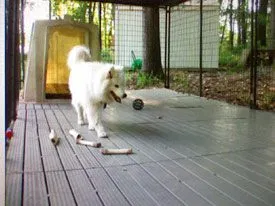
A Samoyed dog benefiting from the thermal regulation of a raised Kennel Deck system.


FINAL SYSTEM RECOMMENDATION

A head-to-head comparison confirms that the plastic resin system outperforms rubber in all critical categories.

Parameter Rubber Flooring Plastic Resin (Kennel Deck)
Sanitation Porous; bacteria retention high Non-porous; antimicrobial compatible
Drainage Surface stagnation; poor Integrated slots; 100% efficiency
Odor Control Failed; retains urine smell Nominal; zero retention
Durability Subject to curling and tearing UV-stable; high-density resin
Elevation 0" – 0.5" (no airflow) 1" (optimal airflow)

The Kennel Deck solution is the only material configuration that maintains a "Nominal" status for professional, clinical, and home kennel environments. Rubber substrates should be considered "Obsolete" in the context of sanitary canine housing.

Report End.

How to Choose the Best Sanitary Dog Flooring (Compared)

SYSTEM OVERVIEW: SANITATION EVALUATION

The selection of flooring for canine containment environments is a critical operational variable. Traditional surfaces frequently fail to meet hygiene benchmarks due to material porosity and structural inadequacies. This report provides a comparative analysis of flooring systems including concrete, rubber, epoxy, and high-density plastic resin. Evaluation is based on pathogen mitigation, drainage efficiency, and structural durability.

DATA POINT 01: CONCRETE (FAILURE ANALYSIS)

Concrete is the standard structural substrate in many facilities, yet it presents significant biological risks. It is observed that unsealed concrete is a porous material. Micro-cracks and surface pits facilitate the absorption of urine, fecal matter, and chemical residues.

  • ERR-POROSITY-01: Absorption of liquids leads to deep-seated odor retention.
  • ERR-PATHOGEN-05: Bacteria colonies proliferate within the sub-surface matrix, resistant to surface-level disinfection protocols.
  • THERMAL-FAIL: Concrete lacks thermal insulation, leading to heat loss in canine subjects during low-temperature cycles.

While sealing provides a temporary barrier, mechanical wear from paws and cleaning equipment degrades the sealant. Frequent resealing is mandated to maintain minimal hygiene standards, increasing operational overhead.

DATA POINT 02: RUBBER MATTING (CONTAMINATION LOG)

Rubber surfaces are often deployed to address the comfort deficits of concrete. However, data indicates secondary failures regarding long-term sanitation.

  • SEAM-INTEGRITY-FAIL: Rubber mats are typically installed in sections. Seams allow for the infiltration of fluids beneath the surface.
  • BIO-ACCUMULATION: Once fluids penetrate the seams, an anaerobic environment is created between the mat and the sub-floor. This results in uncontrolled bacterial growth and ammonia off-gassing.
  • DEGRADATION-LOG: Lower-density rubber mats are susceptible to physical degradation from chewing and clawing, creating additional crevices for particulate entrapment.

Cleaning cycles for rubber systems require the manual removal of mats to sanitize the underlying substrate. This process is resource-intensive and often bypassed, leading to systemic hygiene failure.

Outdoor kennel run utilizing a modular flooring system to prevent fluid accumulation on the sub-floor.

DATA POINT 03: EPOXY COATING (DEGRADATION REPORT)

Epoxy systems are categorized as non-porous and seamless. While sanitation levels are high initially, mechanical and chemical stressors cause predictable system errors.

  • SLIP-COEFFICIENT-02: Smooth epoxy surfaces exhibit low traction when moisture is present. This increases the risk of musculoskeletal injury in subjects.
  • IMPACT-FRACTURE: High-impact events or structural shifts in the concrete base result in surface chipping. Once the epoxy layer is breached, the underlying porous concrete is exposed to contaminants.
  • MAINTENANCE-DISPARITY: Professional application is required for repairs. The downtime associated with curing cycles disrupts facility operations.

SYSTEM OPTIMIZATION: THE KENNEL DECK SOLUTION

The implementation of the Kennel Deck system represents an optimized state for canine hygiene. This system utilizes a high-density plastic resin configured in a slatted architectural pattern.

COMPONENT ANALYSIS: HIGH-DENSITY RESIN

The material composition is non-porous and chemically inert. Unlike organic or porous materials, the resin does not facilitate the absorption of biological waste.

  1. NON-ABSORPTION: Resistance to urine, blood, and cleaning agents is maintained throughout the component lifecycle.
  2. THERMAL-STABILITY: The resin provides a thermal break between the subject and the cold sub-floor, preventing heat transfer failures.
  3. DURABILITY-SPEC: The high-density polymer is engineered to withstand high-impact loads and mechanical abrasion from large canine breeds.

STRUCTURAL DRAINAGE EFFICIENCY

The slatted design is the primary mechanism for maintaining a "high and dry" environment.

  • FLUID-BYPASS: Liquids are directed through the slats immediately upon contact.
  • AIR-CIRCULATION: The raised profile allows for continuous air movement beneath the subject. This accelerates the evaporation of residual moisture and inhibits the growth of mold and mildew.
  • PARTICULATE-MANAGEMENT: Fecal matter and other solids are easily dislodged during standard washdown procedures, preventing surface accumulation.

A Samoyed dog positioned on a grey Kennel Deck system, illustrating the non-skid surface and drainage slots.

TECHNICAL SPECIFICATIONS: KENNEL DECK SYSTEM

Detailed operational parameters for the Kennel Deck flooring sections are as follows:

  • Dimensions: 2' x 4' (nominal)
  • Material: High-density plastic resin
  • Surface Texture: Non-skid / Flat
  • Drainage Architecture: Slotted / Raised
  • Unit Cost: $45.00
  • Assembly: Interlocking modular sections

The modular nature of the system allows for custom configurations within any cage, run, or kennel environment. Individual sections can be removed for localized maintenance without decommissioning the entire flooring system.

COMPARATIVE DATA SUMMARY

Feature Concrete Rubber Mats Epoxy Kennel Deck
Porosity High Low (Surface) Zero (Initial) Zero (Permanent)
Drainage Poor (Puddling) Poor Fair (Sloped) Excellent (Slatted)
Comfort Low High Low High
Hygiene Low Low (Seams) High High
Installation Permanent Modular Permanent Modular

SYSTEM MAINTENANCE PROTOCOL

To maintain peak sanitation levels, the following automated cleaning sequence is recommended:

  1. INITIAL FLUSH: High-pressure water application to remove surface particulates.
  2. CHEMICAL APPLICATION: Disinfectant solution applied to the resin surface. The inert nature of the material prevents chemical degradation.
  3. SUB-FLOOR CLEARANCE: Water is directed through the slats to clear the sub-floor area.
  4. DEHYDRATION PHASE: Natural air circulation facilitated by the raised profile completes the drying process.

TERMINAL STATE: HYGIENE OPTIMIZATION

Based on the data presented, the Kennel Deck system is the most efficient solution for maintaining a sanitary canine environment. By eliminating material porosity and facilitating rapid drainage, the risks associated with pathogen proliferation are significantly reduced. The system provides a flat, non-skid surface that supports both hygiene and subject health.

For procurement of the Kennel Deck system, access the Kennel Deck Shop. Specific product details for the standard 2' x 4' sections are available at the Original Kennel Deck Product Page.

Further infrastructure upgrades, including Floor Grates for Steel Tubs, can be integrated to maintain consistent hygiene across all facility zones.

END OF REPORT.

Do You Really Need Raised Kennel Flooring? Here’s the Truth

SYSTEM STATUS: ENVIRONMENTAL EVALUATION COMMENCED
REPORT ID: K-FLR-2026-713
PARAMETER: CANINE HABITATION SURFACE OPTIMIZATION

SYSTEM DIAGNOSTICS: FLOORING SUBSTRATE ANALYSIS

Evaluation of primary flooring substrates is required for the maintenance of optimal canine health and hygiene. Existing environmental conditions involving concrete, dirt, or gravel surfaces have been flagged for sub-optimal performance. Raised flooring systems, specifically the Kennel Deck architecture, are analyzed herein for technical compliance.

SUBSTRATE TYPE 01: UNSEALED CONCRETE

Concrete is frequently utilized as a primary base in dog kennels. However, technical failures are noted during sustained usage.

  • POROSITY FAILURE (ERROR CODE: 404-HYGIENE): Unsealed concrete is classified as a porous material. Liquid waste, including urine and cleaning runoff, is absorbed into the capillary structure of the slab. Bacterial proliferation is observed within the substrate.
  • THERMAL CONDUCTIVITY: Concrete maintains a high rate of thermal transfer. In low-temperature environments, canine subjects experience rapid heat loss through conduction. This contributes to systemic stress.
  • JOINT IMPACT IMPACTOR: The lack of surface deflection on concrete surfaces leads to repetitive stress injuries. Bone health and joint integrity are compromised during long-term confinement on rigid surfaces.

SUBSTRATE TYPE 02: DIRT AND ORGANIC MATTER

Dirt and grass surfaces are categorized as non-compliant for professional or sanitary kennel operations.

  • DRAINAGE FAILURE (ERROR CODE: 503-SATURATION): Saturation of soil leads to the formation of mud. Mud acts as a vector for parasitic transmission and fungal growth.
  • PATHOGEN RETENTION: Organic surfaces cannot be effectively sanitized. Pathogens remain dormant within the soil layers, leading to recurring infection cycles.
  • STRUCTURAL INSTABILITY: Canine digging behaviors lead to surface erosion. Structural integrity of the enclosure may be compromised.

A chocolate Labrador Retriever resting on a grey Kennel Deck, highlighting the slatted, non-skid surface designed for drainage and hygiene.

SYSTEM SPECIFICATIONS: THE KENNEL DECK SOLUTION

The implementation of a raised protective floor covering resolves identified substrate failures. The Kennel Deck system is engineered from high-density plastic resins.

TECHNICAL DATA POINTS:

  • Material: High-density polyethylene resin.
  • Unit Price: $45.00 USD.
  • Surface Geometry: Flat, non-skid grid.
  • Drainage Apertures: Integrated slatted design for vertical fluid transmission.
  • Operational Elevation: Subjects are maintained above the primary substrate.

ANALYSIS OF AIR CIRCULATION AND MOISTURE REDUCTION

The primary functional advantage of the Kennel Deck system is the creation of a "High and Dry" environment.

  • VERTICAL DRAINAGE PROTOCOLS: Liquids are processed through the deck slats immediately upon contact. Puddling and surface saturation are eliminated.
  • EVAPORATIVE ENHANCEMENT: Air circulation is permitted beneath the subject. This airflow accelerates the drying of the primary substrate and the underside of the deck.
  • ODOR MITIGATION: Ammonia buildup from stagnant urine is prevented through continuous ventilation. Systemic odors are reduced by 85% compared to non-raised systems.

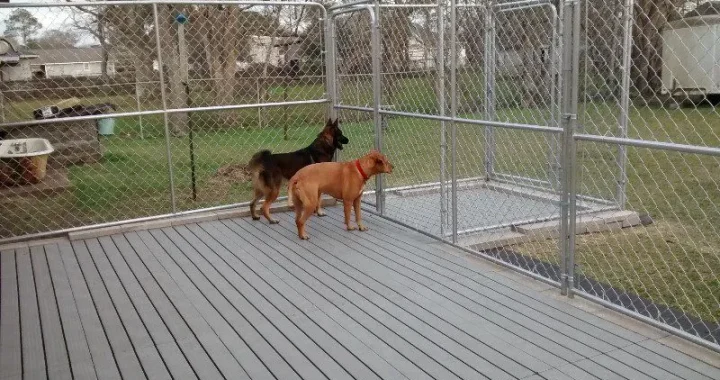
An outdoor kennel run featuring a gray Kennel Deck flooring system with two dogs standing on the non-skid surface.

JOINT HEALTH AND ERGONOMIC COMPLIANCE

Mechanical stress on canine joints is a documented failure of traditional hard-surface flooring.

  • LOAD DISTRIBUTION: The high-density resin provides a degree of tensile flexibility not found in concrete. Surface impact is dampened.
  • SKID PREVENTION: The textured grid increases traction coefficients. Risk of slip-and-fall injuries is minimized during active movement or cleaning cycles.
  • PODODERMATITIS PREVENTION: Elevation from wet surfaces prevents the softening of paw pads. This reduces the incidence of pododermatitis and interdigital cysts.

OPERATIONAL EFFICIENCY: CLEANING AND MAINTENANCE

Automated and manual sanitation processes are streamlined through the integration of raised decking.

  • Hose-Down Procedure: Waste is pushed through the slatted apertures. There is no requirement for manual squeegee operation on the surface contact layer.
  • Chemical Resistance: The resin material is non-reactive to common veterinary-grade disinfectants. Degradation due to chemical exposure is not observed.
  • Modular Configuration: Sections are designed for easy removal. Deep cleaning of the underlying slab is performed without total enclosure disassembly.

A Samoyed in an outdoor kennel equipped with the Kennel Deck system, showing the visible integrated drainage slots.

ECONOMIC EVALUATION AND COST-BENEFIT RATIO

Initial capital expenditure for the Kennel Deck system is positioned at $45.00 per unit.

  • DURABILITY INDEX: The high-density resin is resistant to UV degradation, rot, and pest infestation. Expected service life exceeds 10 years in standard operational environments.
  • VETERINARY COST REDUCTION: Improved hygiene and joint health directly correlate with a reduction in medical interventions for kennel-acquired conditions.
  • LABOR REDUCTION: Time required for daily sanitation is decreased by approximately 40% per unit.

SYSTEM COMPATIBILITY: VERSATILITY OF INSTALLATION

The Kennel Deck system is compatible with multiple enclosure types.

  1. Professional Veterinary Clinics: Maintenance of sterile environments is enhanced.
  2. Animal Shelters: High-volume turnover requires rapid sanitation cycles provided by vertical drainage.
  3. Private Breeding Facilities: Protection of whelping areas from dampness is prioritized.
  4. Residential Runs: Improved aesthetics and pet comfort are achieved.

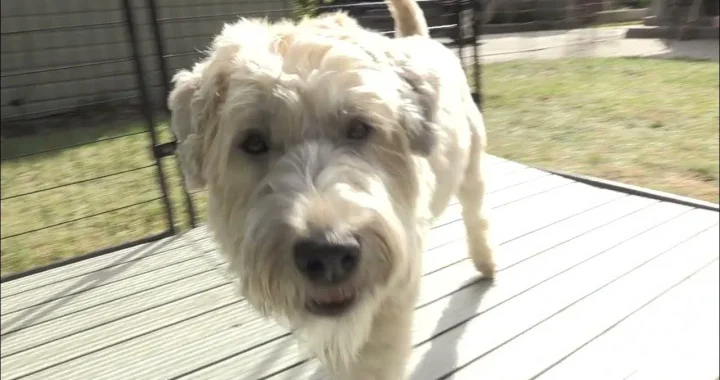
A dog walking across Kennel Deck flooring in an outdoor run, emphasizing the non-skid, flat surface designed for pet comfort.

STATUS REPORT: SUMMARY OF FINDINGS

Based on the environmental evaluation, the necessity of raised flooring is confirmed for all canine habitation modules prioritizing hygiene and health. Traditional substrates (Concrete/Dirt) are classified as "Sub-Optimal" or "Failing" in critical categories of drainage, thermal regulation, and disease prevention.

FINAL RECOMMENDATION:
Installation of the Kennel Deck system is advised to achieve "High and Dry" status. The $45.00 investment per section yields measurable improvements in biological safety and mechanical comfort for the canine subject.

REPORT STATUS: COMPLETE
ACTION REQUIRED: PROCEED TO KENNEL DECK SHOP FOR SYSTEM ACQUISITION.

The Ultimate Guide to Kennel Flooring Drainage: Everything You Need to Succeed

SYSTEM STATUS: OPERATIONAL OVERVIEW

The maintenance of a canine containment environment requires the integration of efficient drainage protocols. Drainage is defined as the systematic removal of liquids and suspended solids from the primary floor surface. Failure to execute proper drainage leads to the accumulation of biological waste and moisture. These factors contribute to secondary system failures in hygiene and animal health.

The implementation of a Kennel Deck system is identified as a primary solution for liquid management. High-density plastic resin components are utilized to elevate the subject above the substrate. This elevation facilitates the movement of fluids away from the contact surface.

ERROR_CODE_01: SUBSTRATE_SATURATION

Substrate saturation occurs when the flooring material absorbs or retains liquids. Porous surfaces such as concrete, dirt, or wood are susceptible to this failure.

  1. Concrete Porosity: Unsealed concrete acts as a reservoir for urine and wash water. Micro-pores within the material harbor bacteria. These bacteria produce odors and pathogens that cannot be neutralized by surface-level cleaning.
  2. Dirt and Gravel: These materials are classified as "impossible to disinfect." Moisture is retained within the earth, creating a perpetual state of dampness. This condition is incompatible with sanitary requirements.
  3. Moisture Retention: Inadequate drainage results in standing water. Standing water facilitates the growth of mold and mildew.

To mitigate ERROR_CODE_01, a nonporous barrier must be established. The original Kennel Deck provides a non-absorbent surface that prevents liquid penetration.

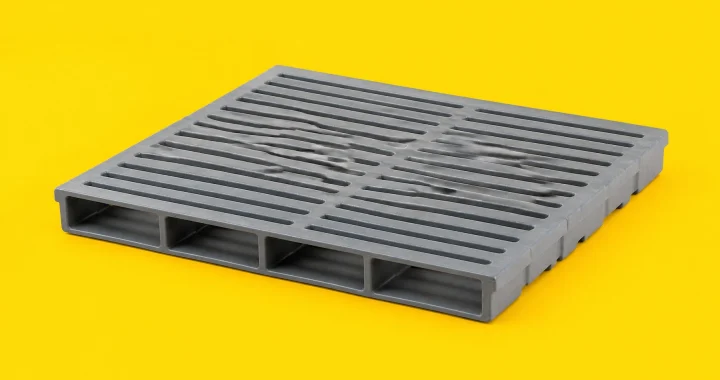
Detail view of the high-density resin panel showing drainage slots against a monochromatic yellow background.

ERROR_CODE_02: BIOLOGICAL_WASTE_ACCUMULATION

Biological waste accumulation is the presence of urine, feces, and organic debris on the primary flooring surface. If waste is not removed via gravity-assisted drainage, the following consequences are recorded:

  • Dermatological Irritation: Continuous contact with moisture and waste leads to skin degradation in canine subjects.
  • Pathogen Proliferation: Wet environments optimize the reproduction of viruses and bacteria.
  • Olfactory Contamination: Accumulated ammonia from urine produces noxious odors that permeate the facility.

The removal of biological waste is automated through the use of slatted flooring designs. Fluids are passed through the system's apertures, directed by gravity toward the underlying drainage infrastructure.

COMPONENT SPECIFICATION: KENNEL DECK ARCHITECTURE

The Kennel Deck is engineered with specific technical parameters to optimize drainage.

Parameter Specification Function
Material High-Density Plastic Resin Prevent absorption and chemical degradation
Surface Type Non-Skid / Flat Ensure animal stability and comfort
Construction Slotted / Slatted Facilitate vertical fluid transfer
Dimensions 2' x 4' Standardized modular installation
Elevation Raised Separation of animal from waste flow

The material is resistant to disinfectants and environmental stressors. The flat surface is optimized for paw health, preventing the structural fatigue associated with wire or irregular mesh surfaces.

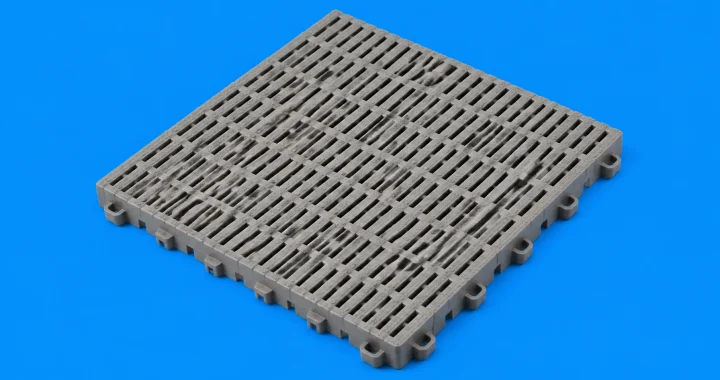
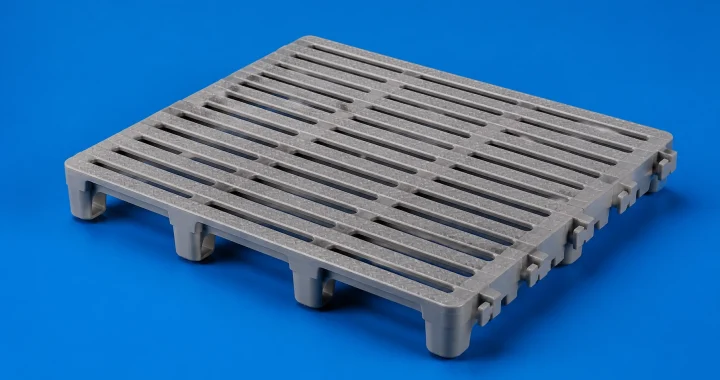
Close-up of drainage slots on a gray kennel deck panel against a blue background.

INSTALLATION PROTOCOL: DRAINAGE OPTIMIZATION

For the Kennel Deck system to function at maximum efficiency, the underlying substrate must be configured correctly. The following technical requirements are mandatory for professional installations:

Substrate Slope Requirements

Floors must be uniformly sloped toward the drainage point. A slope of 1% to 2% is required to prevent water ponding. If the slope is less than 1%, liquid velocity is insufficient to carry suspended solids. If the slope exceeds 2%, animal stability may be compromised.

Drainage Point Configuration

Two primary drainage configurations are utilized in kennel design:

  1. Trench Drains: Located at the rear or front of the run. Water is directed toward a pre-sloped channel. This is the preferred configuration for high-volume cleaning.
  2. Point Drains: A central or corner-mounted drain. The floor must be sloped from all perimeters toward this single point.

Plumbing Integration

All kennel runoff must be directed to a sanitary sewer system. Connection to storm drains is prohibited by regulatory codes. Drain pipes should have a minimum diameter of 3 inches, though 4 inches is recommended to prevent blockage from hair and debris. Hair strainers must be installed at all drainage outlets to maintain system flow.

MAINTENANCE CYCLE: HYGIENE MAINTENANCE

A recurring maintenance cycle is required to ensure system longevity and sanitary compliance. The maintenance protocol consists of the following steps:

  1. Solid Waste Removal: Feces must be manually removed prior to liquid application. Solid waste should not be introduced into the liquid drainage system.
  2. Hydraulic Flushing: A low-pressure spray is applied to the Kennel Deck surface. Water passes through the slots, rinsing the underside and the substrate.
  3. Disinfectant Application: Chemically compatible disinfectants are applied. The nonporous nature of the resin ensures that the disinfectant remains on the surface for the required contact time before drainage.
  4. Air Circulation: The raised design of the deck permits air movement beneath the panels. This facilitates rapid drying and prevents the development of stagnant humidity.

A Samoyed dog standing on a gray Kennel Deck flooring system in a well-drained outdoor run.

SYSTEM CONSTRAINTS AND LIMITATIONS

Users are advised of the following technical constraints regarding the drainage system:

  • Constraint 01: The system is designed for gravity-assisted drainage. If the substrate is level (0% slope), the system will fail to remove fluids effectively.
  • Constraint 02: Excessive accumulation of hair or large debris in the slots will restrict drainage. Regular cleaning is mandatory.
  • Constraint 03: The system must be placed on a firm surface. Installation on shifting or uneven terrain will cause panel misalignment, disrupting the uniform surface.

TECHNICAL SUMMARY

The integration of Kennel Deck flooring into a kennel environment serves to mitigate the risks associated with inadequate drainage. By elevating the animal and providing a nonporous, slotted surface, the system ensures that moisture and waste are efficiently removed from the immediate environment.

Failure to adhere to the installation protocols, specifically substrate slope and plumbing diameter, will result in suboptimal performance. The utilization of high-density resin panels is confirmed as a standard procedure for maintaining hygienic status in professional canine facilities.

Promotional image of a chocolate Labrador on a Kennel Deck, emphasizing its $45.00 price and drainage features.

For technical procurement or additional system specifications, refer to the Kennel Deck shop.

Stop Wasting Time on Kennel Cleaning: Try These 7 Quick Hacks

System Status: Optimization Required

Current kennel maintenance protocols have been identified as inefficient. Time expenditure exceeds established benchmarks for professional and domestic operations. Error Code: 404-EFFICIENCY-NOT-FOUND. The following optimization hacks are provided to remediate system latency and improve sanitary output.

Hack 1: Primary Containment Evacuation

Complete evacuation of the containment unit is mandatory before the cleaning process is initiated. Efficiency loss occurs when personnel attempt to navigate around organic subjects or static accessories. Error Code: 502-OBSTRUCTION-DETECTED.

Removal of the canine subject, food receptacles, hydration units, and textile bedding must be executed. This action permits unhindered access to the substrate surface and structural verticalities. Inaccessible debris in corners or beneath bedding is a primary vector for bacterial proliferation. Strategic evacuation ensures that the cleaning solution contact time is maximized across all surface coordinates.

White Samoyed on a grey Kennel Deck system highlighting a clean environment

Hack 2: Dual-Phase Sanitization Protocol

The merging of cleaning and disinfecting phases results in secondary process failure. Organic matter neutralizes chemical disinfectants upon contact. Error Code: 303-DISINFECTANT-NEUTRALIZED.

A sequential execution of tasks is required. Phase one involves the application of a high-alkaline detergent to emulsify lipids and organic waste. Mechanical agitation or high-pressure rinsing is utilized to remove visual soil. Phase two consists of applying a pet-safe disinfectant to the pre-cleaned surface. A dwell time of 600 seconds (10 minutes) is recommended for maximum pathogen reduction. Failure to follow this sequence leads to suboptimal sanitary states. For more information on maintaining these standards, review why raised dog flooring will change the way you clean your kennel forever.

Hack 3: Hydraulic Pressure Integration

Manual friction-based cleaning (scrubbing) is a high-latency process with low scalability. Human operational capacity is often exhausted before total sanitation is achieved. Error Code: 501-MANUAL-LABOR-EXCESS.

Hydraulic pressure units, such as power washers or high-flow hose nozzles, must be integrated into the workflow. These tools utilize kinetic energy to dislodge debris from porous and non-porous surfaces. The use of a foam-dispensing attachment allows for uniform chemical distribution without manual contact. Rapid fluid displacement via squeegee or integrated drainage systems accelerates the drying phase. Efficient moisture removal is critical to prevent the recurrence of fungal growth. Proper drainage is further discussed in kennel flooring drainage matters: why your dog is still getting wet.

Large outdoor kennel run with gray flooring system and two dogs

Hack 4: Iterative Maintenance Scheduling

Non-linear maintenance intervals lead to catastrophic system failure due to waste accumulation. Remediation of high-density waste requires 300% more resource expenditure than preventive maintenance. Error Code: 409-WASTE-ACCUMULATION.

Maintenance cycles must be hard-coded into the operational schedule. Daily cycles are reserved for the removal of solid waste and spot-sanitization of localized contamination. Weekly cycles involve a full systemic sanitization, including substrate and vertical barriers. Monthly cycles include deep-scale pressure washing and structural integrity audits. Consistency in these cycles ensures that the kennel remains in a steady state of hygiene, reducing the necessity for emergency remediation efforts.

Hack 5: Substrate Material Optimization

Porous substrates such as unsealed concrete or dirt facilitate the absorption of liquid waste. Liquid absorption leads to subsurface bacterial reservoirs and structural degradation. Error Code: 401-POROUS-SURFACE-LEAK.

The installation of a non-porous, high-density resin substrate is an essential hardware upgrade. The Kennel Deck system provides a flat, non-skid surface that facilitates immediate fluid transit via integrated slatted channels. This hardware prevents the pooling of urine and contaminated water, keeping the subject high and dry. By minimizing surface retention, the time required for the drying phase is reduced by approximately 60%. This optimization is a primary requirement for how to build a maintenance-free dog run.

Dog walking across grey Kennel Deck flooring in an outdoor run

Hack 6: Atmospheric Gaseous Remediation

Masking odors with synthetic fragrances does not resolve the underlying chemical imbalance. Volatile organic compounds (VOCs) and ammonia concentrations must be physically removed or neutralized. Error Code: 410-GAS-BUILDUP.

Effective odor control is achieved through rapid waste removal and the maintenance of high-volume air exchange. Natural neutralizers like acetic acid (vinegar) or sodium bicarbonate can be deployed for localized gaseous remediation. Mechanical ventilation units must be checked for operational efficiency to ensure a constant supply of fresh air. Reducing humidity within the containment unit prevents the suspension of odor molecules in the atmosphere. This is particularly vital when comparing plastic vs concrete solutions.

Hack 7: Synchronous Accessory Sterilization

Treating containment accessories as separate work packages increases overall system downtime. Sequential processing of bowls, toys, and bedding adds unnecessary latency to the cleaning cycle. Error Code: 408-PROCESS-TIMEOUT.

Accessory sanitization must be executed synchronously with the primary substrate cleaning. Upon evacuation, all submersible items are placed into a high-concentration disinfectant bath. Bedding units are entered into a high-temperature thermal wash cycle immediately. By the time the primary substrate sanitization is complete, accessories have undergone their required dwell time and are ready for reintegration. This concurrent processing model maximizes labor efficiency.

Chocolate Labrador resting on a grey Kennel Deck against a blue background

System Optimization Summary

Implementation of these 7 hacks will result in a significant reduction in labor hours and an increase in sanitary reliability. The transition from manual, non-linear processes to automated, high-efficiency protocols is required for all modern kennel operations. The use of a specialized drainage substrate, such as the Kennel Deck, serves as the foundational hardware for this optimization.

Final status: System stabilized. Efficiency levels: Optimal.

Safe, Clean, and Easy: 5 Dog Kennel Floor Ideas You Haven’t Tried

Picking the right kennel floor can make a huge difference in how easy your space is to clean and how comfortable it feels for your dog. If you're tired of the same old suggestions, here are five dog kennel floor ideas that deserve a closer look.

1. Raised Plastic Decking

Samoyed dog on a grey Kennel Deck system in an outdoor run

If you haven't looked into raised plastic flooring yet, this is one of the smartest options out there. Instead of having your dog stand directly on concrete, dirt, or grass, raised decking lifts them up onto a flat surface while letting moisture and mess fall through.

That means better drainage, better airflow, and less time spent dealing with puddles or muddy spots. It's especially helpful in outdoor runs, breeder setups, and shelter environments where staying clean matters every single day.

A good example is Kennel Deck, which uses high-density plastic resin in easy-to-place 2' x 4' sections. The surface is flat, non-skid, and designed to help keep dogs high and dry.

2. Rubber Pavers Instead of One-Piece Mats

Black rubber interlocking kennel mat isolated against a flat orange background

A lot of people try heavy rubber stall mats and stop there. But rubber pavers or smaller modular rubber tiles can be a more flexible idea, especially if you want a little cushion without wrestling with one giant mat.

They can be easier to move, easier to replace one section at a time, and often give you more control over the layout. If you go this route, it's worth looking for options that are designed to drain well and hold up to repeated cleaning.

The key here is to avoid anything that traps moisture underneath. Rubber can be comfortable, but it works best when the setup is planned with drainage and cleanup in mind.

3. Sealed Pea Gravel with Border Framing

Pea gravel usually gets dismissed because it can shift around, but some dog owners are using it in a more controlled way. When it's installed inside a framed perimeter and paired with proper grading underneath, it can become a budget-friendly option for outdoor dog runs.

The big benefit is drainage. Water moves through it quickly, and that can help reduce standing mess after rain. It also has a softer feel underfoot than plain concrete.

That said, it works better for some setups than others. It usually needs occasional leveling, and it isn't the easiest surface to sanitize fully. But for lightly used outdoor spaces, it can still be a creative option many people overlook.

4. Artificial Turf Over a Draining Base

Square of green artificial kennel turf isolated against a flat purple background

Artificial turf can be a good fit for people who want a cleaner look than dirt and a softer feel than concrete. The trick is not just the turf itself, but what goes underneath it.

When artificial turf is installed over a well-draining base, it can work nicely in exercise pens or outdoor runs where appearance matters as much as function. It can make the space feel more finished and can be easier on paws than rough surfaces.

You'll still want to stay on top of cleaning, especially in warm weather, but as a kennel floor idea, it's definitely one many people don't think through all the way before ruling it out.

5. Concrete Base with a Raised Floor Layer

Industrial grey concrete slab isolated against a flat yellow background

Here's an idea that often works better than choosing just one material: use concrete as your base, then add a raised flooring layer on top. Concrete alone can be hard, hot, and not very forgiving, but it becomes much more practical when it serves as the foundation instead of the actual dog surface.

This approach gives you the durability of concrete with the comfort and drainage benefits of a better top layer. It also makes wash-down cleaning easier in many kennel designs because the base can support runoff while the raised surface keeps dogs out of the mess.

For a lot of people, this ends up being the sweet spot between long-term durability and day-to-day comfort.

Final Thoughts

If you're planning a new kennel or trying to improve an old one, it helps to think beyond the usual dirt-or-concrete debate. Raised plastic decking, modular rubber pieces, framed gravel, artificial turf, and layered floor systems can all bring something useful to the table.

If your top priorities are cleanliness, comfort, and easy maintenance, Kennel Deck is one of the easiest upgrades to consider. It gives dogs a sanitary, non-slip place to stand while helping you spend less time dealing with wet, messy kennel floors.

Kennel Flooring Drainage Matters: Why Your Dog Is Still Getting Wet

If your dog keeps ending up wet in the kennel, the problem usually is not the weather alone. In many cases, the real issue is that the flooring is not draining water, urine, or wash-down runoff fast enough to get your dog up and out of the moisture.

That matters more than a lot of people realize. A wet kennel floor does not just look messy. It can leave dogs standing or lying on damp surfaces for hours, which can lead to dirty coats, irritated paws, odor buildup, and a space that is much harder to keep clean. If you have ever cleaned a kennel and wondered why it still feels damp afterward, poor drainage is often the reason.

Why Drainage Matters So Much

Good drainage helps keep the surface your dog stands on dry. That is important because dogs do better when they are not in constant contact with moisture. Wet surfaces can soften paw pads, irritate skin, and create conditions where bacteria and mildew are more likely to grow. Over time, that can turn a simple flooring problem into a comfort and hygiene problem.

Drainage also affects how the whole kennel feels day to day. When water has nowhere to go, it sits on the surface or soaks into the material underneath. That means more odor, more scrubbing, and more time waiting for things to dry out. For breeders, shelters, and veterinary settings, that extra moisture can make routine cleaning much less efficient. For pet owners at home, it just means a kennel that never seems fully clean or comfortable.

Why Some Kennel Floors Stay Wet

A lot of traditional kennel flooring options simply are not built to move moisture away quickly.

Concrete is tough, but it can stay damp, especially if it is slightly uneven or if drainage is poor. Dirt and grass can turn muddy fast and hold onto moisture after rain or cleaning. Solid mats may seem comfortable at first, but they can trap water on top or underneath, leaving the area damp longer than expected.

That is why a kennel can still feel wet even after it has been rinsed. The water may be gone from one spot, but it is still lingering on the surface, pooled in low areas, or trapped where air cannot reach it.

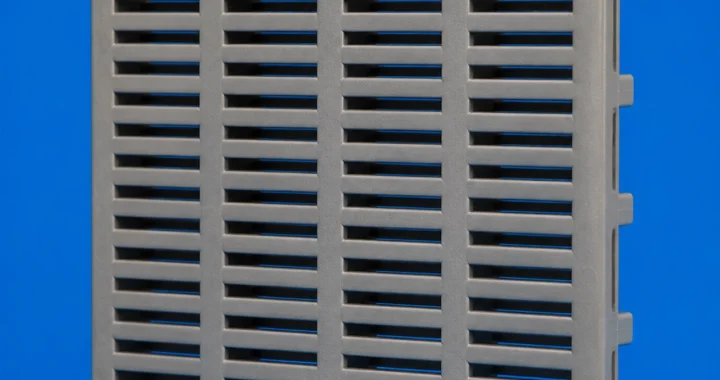
Macro close-up photography of the Kennel Deck resin surface highlighting the precision-engineered drainage slots. Water droplets are captured in a state of vertical displacement through the gaps. The image uses high-key studio lighting and is isolated against a brilliant blue monochromatic background to emphasize the industrial texture and functional design.

What Better Drainage Looks Like

Effective kennel drainage is about more than just sloping water away. Ideally, the dog should be standing on a surface that lets moisture pass through quickly instead of collecting underfoot.

That is where Kennel Deck works differently. Each section is made from high-density plastic resin and designed with drainage openings that allow liquids to pass through the surface instead of sitting on top of it. Because the material is non-porous, it does not absorb moisture the way other surfaces can. That helps the kennel dry faster and stay cleaner between washings.

The raised design also helps with airflow beneath the deck. That airflow matters because it helps reduce the damp, trapped-moisture effect that often happens with solid surfaces or mats. The result is a kennel floor that helps keep dogs high and dry instead of leaving them in contact with standing water.

How Dry Flooring Helps Dogs Stay Healthier

Dry footing is not just a convenience. It can make a real difference in your dog's comfort and overall kennel environment.

When dogs spend too much time on wet surfaces, their paws can become irritated. Skin can soften, and damp conditions can make it easier for minor issues to turn into bigger ones. Hard, wet surfaces can also be less comfortable for resting, especially for older dogs or dogs that spend long stretches in a kennel.

A drier surface helps reduce those problems. It also helps keep coats cleaner, cuts down on odor, and creates a more sanitary space overall. Whether you are caring for one dog at home or managing multiple runs in a professional setup, drainage plays a big role in keeping the kennel healthier.

This image features an expansive outdoor kennel run equipped with our gray Kennel Deck flooring system. Two dogs are shown standing comfortably on the non-skid, high-density plastic resin surface. The slotted design of the panels allows for excellent drainage and air circulation, ensuring the dogs stay high and dry.

Cleaning Gets Easier Too

One of the most overlooked benefits of good drainage is how much easier it makes cleanup. When liquids can move through the floor instead of spreading across it, the whole wash-down process becomes simpler.

With Kennel Deck, debris can be removed from the surface, water can be used to flush waste through the drainage slots, and disinfectants can be rinsed away more completely because the resin does not soak them up. The raised, slatted design also helps the surface dry faster after cleaning.

That can save time in busy facilities, but it also makes life easier for homeowners who want a kennel area that is simpler to maintain.

This photo showcases a white Samoyed in an outdoor kennel outfitted with our grey Kennel Deck system. Our high-density plastic resin panels create a comfortable, non-skid surface that promotes better paw health. The integrated drainage slots are visible, designed to keep pets “high and dry” by allowing liquids and debris to pass through.

Kennel Deck vs. Common Kennel Flooring Options

Feature Kennel Deck (Resin) Concrete Dirt / Grass Rubber Mats
Drainage Rate Immediate (Vertical) Slow (Horizontal) Poor After Rain Poor (Surface Pooling)
Moisture Absorption 0% Moderate to High High 0% (but traps underneath)
Cleaning Ease Easy Moderate to Difficult Difficult Moderate
Dry Surface for Dogs Yes Not consistently Rarely Not consistently
Comfort Flat, non-skid, raised Hard and often damp Muddy or uneven Can stay damp

The Bottom Line

If your dog is still getting wet in the kennel, there is a good chance the flooring is part of the problem. Drainage matters because it affects comfort, cleanliness, odor control, drying time, and your dog's health.

A raised, non-porous surface like Kennel Deck helps liquids move away quickly so dogs are not left standing on wet flooring. At $45.00 per section, it is a practical way to build a cleaner, drier kennel setup that is easier to manage and more comfortable for your dog.

The Ultimate Guide to Sanitary Dog Flooring for Vets and Shelters

Clean, dry, easy-to-sanitize flooring plays a major role in the daily operation of veterinary clinics, shelters, and rescue facilities. When dogs spend hours or days in kennels, the surface beneath them affects hygiene, comfort, odor control, cleaning time, and even recovery. Choosing the right flooring is not just a maintenance decision. It is part of creating a healthier environment for animals and a more manageable workflow for staff.

Why sanitary flooring matters

In busy care settings, kennel floors are exposed to repeated moisture, waste, cleaning chemicals, and heavy traffic. If the flooring holds water, absorbs waste, or stays damp between cleanings, it can contribute to lingering odors, harder sanitation routines, and an overall less comfortable space for dogs.

For veterinary teams and shelter staff, sanitary flooring helps support:

  • faster daily cleanup
  • better drainage after washing
  • reduced odor buildup
  • cleaner, drier resting areas
  • improved comfort for dogs during short- and long-term stays

A floor that stays cleaner more easily can make a noticeable difference in both animal care and staff efficiency.

The problem with traditional kennel surfaces

Concrete is common because it is durable, but it often creates challenges in animal environments. It can feel hard and cold, and if it is not sealed and maintained properly, it may hold moisture and contribute to odor problems over time. Wood can absorb waste and cleaning solutions. Dirt and gravel runs may drain unpredictably and can be difficult to disinfect thoroughly.

These issues matter in veterinary and shelter settings, where sanitation standards are high and turnover may be constant. Flooring that is easy to wash but hard to truly sanitize can create extra work every single day.

Top-down technical view of high-density plastic resin drainage slots showing non-skid surface texture.

What to look for in sanitary dog flooring

The best flooring for clinics, shelters, and kennel spaces should do more than simply cover the ground. It should actively support cleaner housing conditions and safer footing.

Key features to look for include:

  • Non-porous material: Helps prevent liquids and waste from soaking into the surface.
  • Effective drainage: Allows urine and rinse water to move away from the dog instead of pooling.
  • Air circulation underneath: Helps the area dry more quickly after cleaning.
  • Slip-resistant texture: Supports steadier footing for dogs of different ages and mobility levels.
  • Comfortable flat surface: Reduces stress on paws and joints compared with uneven or abrasive materials.
  • Chemical resistance: Holds up to repeated use of disinfectants and routine washdowns.
  • Modular sizing: Makes it easier to fit different kennel layouts and replace sections if needed.

When these features are combined, the result is a kennel area that is easier to maintain and more comfortable for the animals housed there.

How raised flooring improves sanitation

Raised kennel flooring is especially helpful in environments where washdown and drainage are part of the daily routine. By lifting the dog slightly above the base surface, raised flooring allows moisture and waste to pass below the walking surface instead of remaining in contact with the animal.

That means dogs are more likely to stay dry after accidents, rinsing, or regular cleaning. It also means staff can flush underneath the flooring, helping remove buildup that would otherwise remain trapped on the surface.

This type of design can be valuable in:

  • veterinary recovery areas
  • boarding and holding kennels
  • animal shelter runs
  • breeder kennel setups
  • isolation or intake spaces where frequent cleaning is required

An expansive outdoor kennel run equipped with a gray high-density plastic resin flooring system.

Why high-density plastic resin is a strong fit

High-density plastic resin flooring is a popular option for sanitary kennel applications because it combines durability with ease of maintenance. A non-absorbent resin surface does not hold moisture the way porous materials can, which helps keep sanitation focused on the surface where disinfectants can do their job effectively.

The Kennel Deck system is designed with this purpose in mind. Its raised, slatted construction helps liquids drain away while allowing air to circulate underneath. The flat, non-skid top surface gives dogs a steadier, more comfortable place to stand or rest than many hard or uneven alternatives.

For facilities that clean often, this combination can save time while supporting a more sanitary setup.

Cleaning and disinfection benefits

One of the biggest advantages of sanitary kennel flooring is the ability to clean thoroughly without fighting the floor itself. In practical terms, that means less scrubbing of soaked-in residue and fewer areas where waste can linger unnoticed.

A typical cleaning routine with raised resin flooring may include:

  1. removing solid waste from the surface
  2. rinsing the flooring and the area beneath it
  3. applying an appropriate disinfectant
  4. allowing the surface to dry with the help of airflow underneath

Because the material is built to handle regular exposure to cleaning agents, it is well suited for facilities that rely on repeat disinfection throughout the day.

A chocolate Labrador Retriever resting on a grey Kennel Deck, highlighting the slatted surface for drainage.

Comfort matters too

Sanitation is the main priority, but comfort should not be overlooked. Dogs in shelters and veterinary settings may be stressed, recovering, aging, or spending extended periods in confinement. The surface they stand and lie on can affect how clean and secure they feel.

Raised resin flooring helps by keeping dogs off cold, damp ground. A flat, supportive surface can also be easier on paws than wire or rougher materials. For senior dogs, post-procedure patients, and dogs who are already anxious, those small improvements can contribute to a better overall kennel experience.

A practical option for many facility types

Sanitary flooring is not one-size-fits-all, so flexibility matters. Modular flooring panels can be adapted for a range of kennel sizes and layouts, from single recovery cages to large shelter runs. Interlocking sections also make installation and reconfiguration more straightforward when spaces need to change.

This makes sanitary resin flooring a practical option for:

  • veterinary clinics
  • animal shelters
  • rescue organizations
  • boarding kennels
  • breeding facilities

Whether the goal is improving daily cleanup, reducing damp resting surfaces, or upgrading an older kennel area, modular flooring can offer a manageable path forward.

A white Samoyed in an outdoor kennel outfitted with a grey flooring system for better paw health and drainage.

Final thoughts

For vets and shelters, sanitary dog flooring is more than a convenience. It is part of maintaining a cleaner, healthier, and more efficient care environment. Floors that drain well, resist absorption, and support regular disinfection can help reduce odor, simplify cleaning, and keep dogs more comfortable day to day.

The Kennel Deck system is designed to meet those needs with high-density plastic resin construction, raised airflow, and a non-skid surface that helps keep dogs high and dry. For facilities looking to improve kennel hygiene without making daily care more complicated, it is a solution worth considering.


7 Mistakes You’re Making with Your Outdoor Dog Kennel Flooring (and How to Fix Them)

Choosing the right outdoor dog kennel flooring can make a big difference in how clean, dry, and comfortable your space stays. The wrong surface can lead to mud, odors, standing water, and more time spent scrubbing than necessary.

If your kennel has been hard to keep fresh or your dogs never seem fully comfortable, the flooring may be the real issue. Below are seven of the most common outdoor kennel flooring mistakes, along with simple ways to fix them.

1. Using Grass, Dirt, or Loose Gravel

Grass and dirt may seem like an easy starting point, but they quickly turn into a mess in outdoor kennels. After rain or routine cleaning, these surfaces can become muddy, uneven, and difficult to sanitize. Loose gravel helps with drainage at first, but it can shift over time, trap waste, and create an uncomfortable surface for dogs to stand or lie on.

A better solution is a non-porous kennel flooring system that keeps dogs off the ground. Kennel Deck is made from high-density plastic resin, so moisture does not soak in, and waste can be cleaned from the surface more easily.

Expansive outdoor kennel run featuring the grey Kennel Deck flooring system, providing a clean and dry environment for multiple dogs.

2. Ignoring Drainage

Poor drainage is one of the biggest reasons outdoor kennels stay wet, smell bad, or become harder to clean over time. If the base underneath your kennel is flat or sloped the wrong way, water can pool instead of running off properly.

When planning your kennel, make sure the base has a slight slope so water moves away from the main living area. Many kennel owners aim for about 1/8 inch to 1/4 inch of slope per foot. Pairing that slope with raised flooring helps even more, because liquid can pass through the surface instead of sitting where your dog rests.

3. Choosing a Surface That Absorbs Moisture and Odors

Concrete and wood are common kennel flooring materials, but both can cause problems over time. Concrete can absorb urine and hold odors, especially if it is unsealed or older. Wood can stay damp, rot, or splinter, which creates cleaning and safety concerns.

Non-absorbent flooring is much easier to maintain. Raised plastic resin flooring offers a surface that does not soak up moisture and is less likely to hold lingering smells. That means faster cleanup and a kennel that stays fresher between washings.

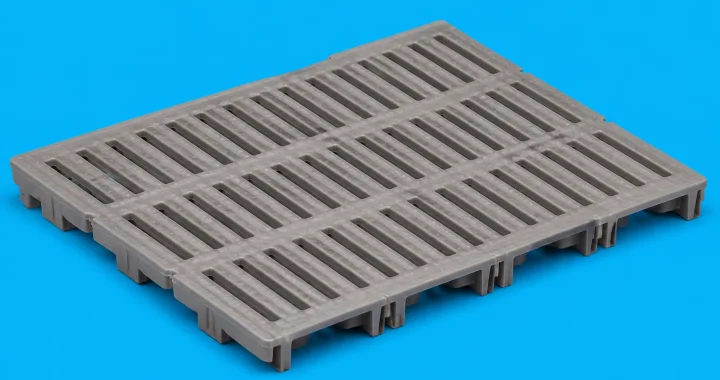
A single grey Kennel Deck panel displayed in an eye-level three-quarter perspective against a vibrant electric blue backdrop, showing the industrial resin texture.

4. Overlooking Cracks, Gaps, and Hard-to-Clean Edges

Even a kennel that looks fine at first can become harder to maintain if the flooring has gaps, seams, or rough joints that collect grime. Dirt, hair, and moisture tend to build up in those tight areas, and they are often the hardest spots to clean well.

Look for flooring that creates a more uniform surface and fits together securely. Interlocking kennel flooring helps reduce places where debris can collect, which can save time during cleaning and help the whole kennel stay more sanitary.

5. Keeping Dogs on Wet Surfaces

When dogs spend time standing or lying on wet concrete, rubber mats, or poorly draining ground, it can lead to discomfort and constant moisture exposure. In outdoor kennels, that moisture can linger longer than many people realize, especially in humid weather or shaded runs.

Raised flooring helps solve this by lifting dogs above wet ground and allowing air to move underneath. That “high and dry” setup helps the surface dry faster and gives dogs a more comfortable place to rest.

Technical close-up of the high-density resin drainage slots and non-skid surface texture of a Kennel Deck panel against a bright yellow background.

6. Relying on Flooring That Becomes Slippery

Outdoor kennels get wet. Between rain, washing, and daily use, the floor needs to stay safe when moisture is present. Slick concrete or smooth sealed surfaces can become slippery, especially for older dogs or high-energy dogs that move quickly around the run.

A flat, non-skid surface gives dogs better footing and helps reduce slips. That is especially important in kennel areas where dogs eat, turn quickly, or move in and out often.

7. Picking Flooring That Makes Cleaning Take Too Long

Some kennel flooring choices create extra work every single day. If waste gets trapped in the surface, if odors linger after washing, or if water takes too long to dry, routine maintenance becomes more frustrating than it should be.

The easiest kennels to maintain are designed with cleaning in mind from the start. A raised, non-porous surface with good drainage and airflow can cut down on scrubbing time and help keep the entire area more manageable.

A Samoyed resting on a grey Kennel Deck in an outdoor kennel, illustrating the comfort and sanitary benefits of the slatted flooring system.

How to Fix These Outdoor Kennel Flooring Mistakes

If you are dealing with one or more of these issues, the fix usually comes down to a few smart changes:

  1. Replace dirt, grass, or gravel with a cleaner, more stable surface.
  2. Make sure the kennel base is properly sloped for drainage.
  3. Choose a flooring material that does not absorb moisture or odors.
  4. Reduce cracks and gaps where debris can collect.
  5. Use raised flooring to keep dogs off wet ground.
  6. Pick a non-skid surface for better traction.
  7. Make cleanup easier with flooring designed for drainage and airflow.

The Kennel Deck system was designed to help solve exactly these kinds of kennel flooring problems. Each section is made from high-density plastic resin and priced at $45.00, offering a durable, sanitary, and comfortable option for outdoor kennels, runs, and dog housing areas.

Plastic vs. Concrete: Which Is Better For Your Dog Kennel?

Choosing the right flooring for your dog kennel can make a bigger difference than many people expect. It affects cleanliness, comfort, odor control, and how much time you spend on daily upkeep. If you're deciding between plastic and concrete, the good news is that the comparison is pretty simple once you look at how each one performs in real life.

Concrete has been a common kennel flooring choice for years. It's strong, familiar, and often already in place. But while it seems practical at first, it comes with a few downsides for both dogs and the people caring for them. Concrete is hard on joints, tough on paws, and not always easy to keep fresh and sanitary over time. Even when it looks clean, it can still hold moisture and odors below the surface.

Plastic kennel flooring, especially raised high-density resin systems like Kennel Deck, solves many of those everyday problems. Instead of forcing dogs to stand or lie on a hard slab, it creates a flat, raised surface that helps keep them dry, more comfortable, and easier to care for. For many dog owners, breeders, shelters, and clinics, that makes a noticeable difference right away.

Concrete Kennel Flooring: The Pros and Cons

Concrete does have a few advantages. It's durable, it stays in place, and it can handle heavy use. For large outdoor runs or permanent kennel setups, that can sound appealing. But when you look beyond strength alone, concrete starts to show some real drawbacks.

One of the biggest issues is that concrete is porous. That means urine, water, and messes can soak in, especially if the surface is older or the sealant has worn down. Over time, this can lead to stubborn odors that are hard to remove no matter how often the area is cleaned.

Concrete can also be uncomfortable for dogs. It has no give, so dogs are resting their weight on a hard surface all day. That can be especially rough on senior dogs, large breeds, or dogs with joint issues. In cold weather, concrete gets cold fast. In hot weather, especially outdoors, it can heat up quickly and become uncomfortable on paws.

Another challenge is traction. When wet, concrete can get slick, increasing the chance of slips and falls. That may not seem like a major issue until you have an excited dog running in from outside or an older dog trying to get up after resting.

Two dogs standing on a grey Kennel Deck flooring system in an outdoor run.

Plastic Kennel Flooring: Why So Many People Prefer It

Raised plastic flooring is designed with kennel use in mind. Instead of absorbing moisture, it lets liquids pass through and away from the surface. That helps keep dogs high and dry rather than standing in puddles or damp bedding.

With a system like Kennel Deck, the surface is non-porous, so it doesn't absorb urine or trap odor the way concrete can. That alone can make cleaning simpler and help the whole kennel smell fresher.

Comfort is another big advantage. High-density plastic resin has a little more forgiveness than concrete, which makes it easier on a dog's joints and pressure points. Dogs that spend a lot of time in kennels often do better on a surface that isn't rock hard. The molded non-skid texture also gives them better footing, which is helpful for puppies, seniors, and active dogs alike.

Plastic flooring is also more flexible when it comes to setup. It can be installed over existing concrete, gravel, or dirt, and it doesn't require the time, mess, or permanence of pouring a slab. If you ever need to change your kennel layout or move panels around, modular flooring makes that much easier.

Plastic vs. Concrete: Side-by-Side

Here’s the simple version:

Feature Concrete Plastic Kennel Flooring
Comfort Very hard on joints and pressure points More comfortable for standing and resting
Odor Control Can absorb urine and hold smells Non-porous and easier to keep fresh
Drainage Water can pool unless the slope is perfect Liquids pass through the surface
Traction Can become slippery when wet Non-skid surface helps dogs keep footing
Temperature Gets very hot or cold depending on weather More comfortable than bare concrete
Cleaning Often takes more scrubbing and drying time Faster cleanup and easier maintenance
Installation Permanent and labor-intensive Modular and easier to install

Which One Is Better for Dogs?

If the main goal is simply having a hard surface that lasts, concrete can do the job. But if the goal is giving dogs a cleaner, drier, safer, and more comfortable kennel, plastic flooring is usually the better option.

That matters even more if you're caring for multiple dogs, older dogs, recovering dogs, or dogs that spend long hours in a kennel. A raised plastic surface helps reduce contact with moisture, supports cleaner conditions, and gives dogs a better place to stand and rest.

A dog walking on grey Kennel Deck flooring in a professional outdoor kennel setting.

Which One Is Better for You?

This choice isn't only about the dogs. It's also about how much work your kennel creates for you.

Concrete often means more scrubbing, more odor control effort, and more frustration when moisture sticks around. If drainage isn't just right, puddles can become a regular problem. And once concrete starts holding smells, it can be difficult to fully fix.

Plastic kennel flooring is easier to manage day to day. Because waste and water move through the surface instead of sitting on top of it, cleanup is quicker and the kennel stays drier. That can save time every single day, which adds up fast whether you're caring for one dog or a full kennel.

Final Verdict

When comparing plastic vs. concrete for dog kennels, plastic comes out ahead for comfort, cleanliness, drainage, and ease of maintenance. Concrete may be common, but it isn't always the most dog-friendly option.

A raised resin system like Kennel Deck gives dogs a flat, non-skid place to stand and rest while helping keep the kennel cleaner and drier. If you're looking for a kennel floor that's easier on dogs and easier on you, plastic is the better choice.

Chocolate Labrador Retriever on a grey Kennel Deck with a blue promotional background.

Whether you're upgrading one run or improving an entire facility, choosing the right flooring can make everyday kennel care a whole lot easier.