How Much Kennel Flooring Do I Need? A Coverage & Buying Guide for Any Kennel Size

Buying the right amount of kennel flooring starts with one basic calculation: determine the area to be covered, then match that measurement to the coverage provided by each flooring section.

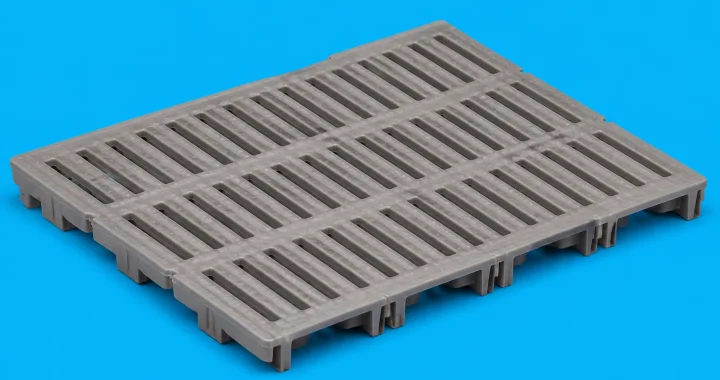
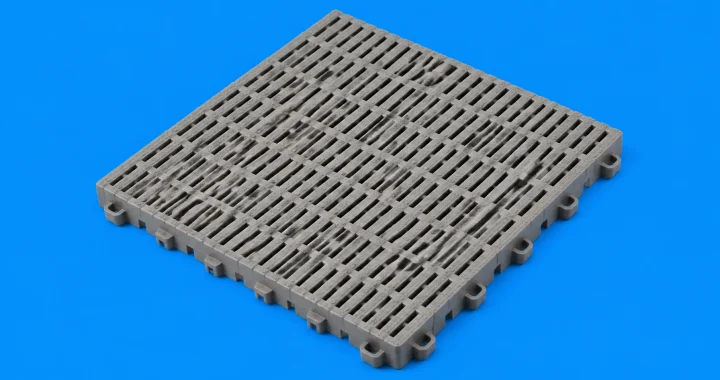
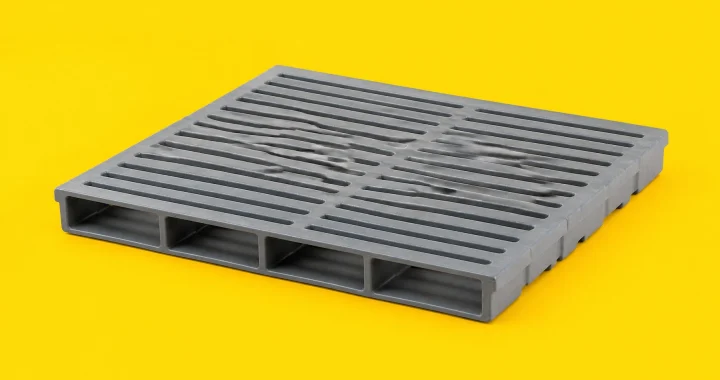
For Kennel Deck, each section is designed for a nominal 2-foot by 4-foot area, providing approximately 8 square feet of coverage. The actual section measures approximately 23 1/2 inches by 47 1/2 inches by 2 inches, allowing it to fit inside a standard 2-foot by 4-foot space.

This guide explains how to measure cages, kennel runs, veterinary enclosures, and animal shelter flooring areas so the correct quantity can be estimated before ordering.

Start With an Accurate Floor Plan

Before calculating quantities, make a simple sketch of the area. The sketch does not need to be architectural. It only needs to show the length and width of each space, along with fixed obstacles.

Record the following:

  • Individual cage or kennel dimensions
  • Run dimensions
  • Door openings and gate locations
  • Posts, corners, drains, or other obstructions
  • Areas that will not receive flooring
  • Any adjoining sections that may be covered later

Each area should be measured separately. A facility with several runs may have slightly different dimensions from one enclosure to the next. Treating every run as identical when they are not can result in an inaccurate order.

For animal shelter flooring projects, a separate measurement list should be created for:

  • Dog cages
  • Individual runs
  • Recovery areas
  • Isolation spaces
  • Washdown zones
  • Covered outdoor kennel areas

This makes it easier to calculate the required quantity by zone and identify where cuts will be needed.

Measure the Clear Inside Dimensions

Measure the usable floor area inside the kennel, cage, or run. Use the inside length and inside width rather than the outside dimensions of the enclosure.

For example, if the clear floor area measures 10 feet long by 10 feet wide:

10 feet × 10 feet = 100 square feet

If the enclosure has a wall, frame, or gate that reduces the usable floor space, measure around that feature. If the flooring will be installed inside a cage or kennel frame, the slightly smaller actual dimensions of the Kennel Deck section can help the flooring fit within the enclosure.

For a non-rectangular space, divide the floor into smaller rectangles. Calculate each rectangle separately, then add the results.

Example:

  • Main area: 8 feet × 10 feet = 80 square feet
  • Side area: 2 feet × 4 feet = 8 square feet
  • Total area: 88 square feet

This method is more reliable than estimating the entire space as one large rectangle.

Kennel Deck flooring installed across an outdoor kennel run with dogs standing on the raised surface

Use the Coverage Formula

Once the total square footage has been calculated, divide it by the coverage of one Kennel Deck section.

Kennel Deck quantity formula

Total square feet ÷ 8 = number of sections

The result should always be rounded up to the next whole section.

For a 10-foot by 10-foot kennel:

  • 10 × 10 = 100 square feet
  • 100 ÷ 8 = 12.5 sections
  • Required quantity: 13 Kennel Deck sections

This is the standard example provided for the Kennel Deck system. One section can be cut to fill the remaining half-section of space.

For a 4-foot by 8-foot run:

  • 4 × 8 = 32 square feet
  • 32 ÷ 8 = 4 sections
  • Required quantity: 4 sections

For a 5-foot by 10-foot run:

  • 5 × 10 = 50 square feet
  • 50 ÷ 8 = 6.25 sections
  • Required quantity: 7 sections

The formula provides the baseline quantity. The final layout should still be reviewed before materials are purchased.

Coverage Guide for Common Kennel Sizes

The following estimates are based on approximately 8 square feet of coverage per section.

Kennel or run size Floor area Minimum sections by area
3 × 6 feet 18 sq. ft. 3
4 × 8 feet 32 sq. ft. 4
5 × 10 feet 50 sq. ft. 7
6 × 6 feet 36 sq. ft. 5
8 × 10 feet 80 sq. ft. 10
10 × 10 feet 100 sq. ft. 13
10 × 20 feet 200 sq. ft. 25

These figures represent the number of sections needed to meet or exceed the calculated square footage. They do not account for unusual corners, extensive trimming, or a spare replacement section.

Estimating Flooring for Cages

Cages typically require less material than full-size runs, but more cutting may be involved. The correct approach is still based on the cage’s clear floor dimensions.

Example: a cage measures 24 inches by 36 inches.

  • 24 inches = 2 feet
  • 36 inches = 3 feet
  • 2 × 3 = 6 square feet
  • 6 ÷ 8 = 0.75 section

One Kennel Deck section would provide enough material for this cage after cutting.

The unused portion may be useful for another cage of the same size. When multiple cages are arranged in a row, the layout should be planned before cutting so the remaining pieces can be allocated efficiently.

For example, if six cages each require 6 square feet:

  • 6 cages × 6 square feet = 36 square feet
  • 36 ÷ 8 = 4.5 sections
  • Minimum quantity by area: 5 sections

A facility may choose to order an additional section if the cages have different dimensions or if replacement material is needed for future maintenance.

Estimating Flooring for Kennel Runs

Kennel runs are generally easier to calculate because their dimensions are larger and more consistent. Measure every run, calculate its area, and multiply by the number of identical runs.

Example: a shelter has ten runs measuring 4 feet by 8 feet.

  • One run: 4 × 8 = 32 square feet
  • Ten runs: 32 × 10 = 320 square feet
  • 320 ÷ 8 = 40 sections

The baseline quantity is 40 Kennel Deck sections.

If all ten runs are straight rectangles with no unusual obstructions, this may be an efficient layout. If posts, drains, or gate frames require repeated cuts, one or two additional sections may be practical. A spare can also reduce downtime if a section is damaged and needs to be replaced.

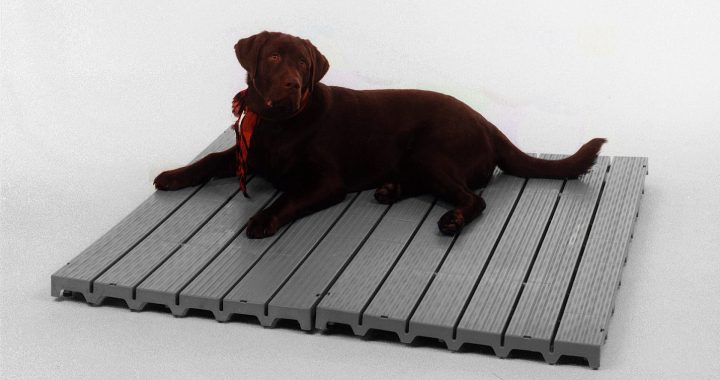
Dog resting on a gray Kennel Deck section, showing the flat, non-skid surface and drainage openings

Account for Cuts and Layout

Kennel Deck sections can be cut with a circular saw or handsaw. Cutting allows the flooring to be fitted around posts, walls, drains, and corners. However, the cut plan should be considered before installation.

The most efficient layout usually follows these steps:

  1. Place full sections in the largest open portion of the kennel.
  2. Keep factory edges aligned where possible.
  3. Position cut pieces along walls or at the back of the enclosure.
  4. Use larger leftover pieces before cutting a new section.
  5. Keep access points, gates, and drains clear.
  6. Check that the finished surface remains stable and properly supported.

A simple grid can be drawn on the floor plan to represent each 2-foot by 4-foot section. This can show where full sections will be installed and where a cut section will be required.

For a 10-foot by 10-foot enclosure, the square-foot formula produces 12.5 sections. Ordering 13 sections provides enough material to cover the area, with one section cut to complete the layout.

For irregular areas, the minimum mathematical quantity may not be sufficient if many small offcuts are created. In those cases, ordering one additional section may be more practical than attempting to use multiple narrow pieces.

When to Add Extra Material

A small amount of extra material can be useful, but the amount depends on the layout.

Additional material may be appropriate when:

  • The kennel has several corners or angled sections.
  • Flooring must be cut around drains or posts.
  • The enclosure dimensions do not align with the section dimensions.
  • Multiple cages have different floor sizes.
  • A spare section is desired for future replacement.
  • The project includes both indoor and outdoor areas.

For standard rectangular Kennel Deck installations, the next whole section after dividing by 8 usually provides the primary coverage allowance. For complex projects, adding one or more sections should be considered after reviewing the cutting plan.

If a different flooring product is being considered, its coverage may be listed differently. Tiles, mats, and rolls may require a separate waste allowance, commonly 5% to 10%. The manufacturer’s coverage specifications should be used rather than assuming every product covers the same area.

Choosing a Practical Flooring Setup

The correct quantity is only one part of a successful kennel flooring installation. The flooring system should also match the daily use of the space.

Kennel Deck is designed for cages, runs, and other canine housing areas. Its high-density plastic resin construction provides:

  • A raised surface that keeps dogs above moisture
  • Slatted openings for drainage
  • Air circulation beneath the deck
  • A flat, non-skid walking surface
  • A non-porous material that does not absorb odors
  • Modular sections that can be expanded or cut to fit

For a private kennel, the required quantity may be calculated for one run or one sleeping area. For a breeder, veterinary clinic, or animal shelter, the same calculation can be repeated by zone and combined into a complete material list.

The Kennel Deck product page includes the section dimensions, product details, and the 10-by-10-foot calculation. The animal shelter flooring guide provides additional information about drainage, sanitation, traction, and facility use.

Final Calculation Checklist

Before ordering dog kennel flooring, confirm the following:

  • The clear inside length and width have been measured.
  • Each separate cage, run, or room has been calculated.
  • Irregular areas have been divided into rectangles.
  • Total square footage has been added together.
  • The total has been divided by 8 square feet per Kennel Deck section.
  • The result has been rounded up.
  • The layout has been reviewed for cuts and obstructions.
  • A spare section has been considered for larger or high-use facilities.

For assistance with a larger installation, contact Kennel Deck with the number of cages or runs and their measurements. The company also provides multi-unit quantity options for common kennel layouts.

Accurate measurements make the buying process more predictable. With the area calculated and the layout planned, the required kennel flooring quantity can be estimated before installation begins.

Struggling With Kennel Odors? 10 Sanitary Dog Flooring Ideas to Keep Things Fresh

If kennel odors seem to linger no matter how often you clean, the flooring under your dogs may be a big part of the problem. Surfaces like concrete, dirt, and wood can soak up urine, hold moisture, and give odor-causing bacteria a place to stick around. That is why choosing the right kennel flooring can make such a noticeable difference.

A good sanitary dog flooring setup helps liquid drain away quickly, improves airflow, and makes routine cleaning easier. Below are ten practical flooring ideas that can help dog owners, breeders, kennel operators, and shelter teams keep their spaces cleaner, drier, and fresher.

1. Choose Raised Dog Flooring

Raised dog flooring creates space between your dog and the surface underneath. That gap allows urine, wash water, and moisture to move away instead of sitting where dogs stand or lie down. The result is a kennel that stays drier and is much less likely to develop that damp, stale smell so common with flat surfaces.

2. Look for High-Density Plastic Resin

High-density plastic resin is a smart choice for kennel flooring because it does not absorb moisture the way wood, dirt, or unfinished concrete can. When liquid stays on the surface instead of soaking in, cleanup is easier and odors are less likely to settle into the flooring over time. Systems like those found at www.kenneldeck.com use this type of material for long-lasting performance and easier sanitation.

3. Pick a Non-Skid Surface

Dogs need secure footing, especially in runs and kennel areas that are cleaned often. A non-skid surface helps reduce slipping while still being easy to wash down. Compared with deep rubber mats or textured materials that trap hair and debris, a flat plastic surface with grip can offer a better balance of comfort, safety, and cleanliness.

An expansive outdoor kennel run with gray Kennel Deck flooring, showing dogs on a non-skid, high-density plastic surface.

4. Improve Airflow Under the Floor

Better airflow is one of the simplest ways to help control kennel odors. Raised flooring allows air to move under and around the panels, which helps moisture dry faster after rinsing or accidents. When surfaces dry more quickly, there is less opportunity for odor-causing bacteria to grow.

5. Use Flooring With Fast Drainage

Standing liquid is one of the biggest causes of kennel odor. Slatted flooring helps urine and rinse water move through and away from the walking surface instead of pooling on top. The faster moisture drains, the easier it is to keep the area cleaner and more comfortable for dogs.

6. Avoid Porous Materials That Trap Bacteria

Porous surfaces tend to hold onto moisture, waste residue, and bacteria even after cleaning. That is one reason concrete and wood can continue to smell long after they have been washed. Non-porous plastic kennel flooring helps remove that problem by giving waste and cleaning solutions fewer places to soak in and linger.

A dog walking on Kennel Deck flooring in an outdoor run, emphasizing the slatted design for superior drainage.

7. Consider Modular Panels for Flexible Coverage

Modular flooring panels make it easier to fit different kennel sizes and layouts without leaving awkward gaps. That matters because uncovered spots can become places where waste collects and odors build up. Another advantage is that individual panels can be lifted when you want to clean underneath or reconfigure the space.

8. Choose a Surface That Stays More Comfortable

Concrete and metal can become very hot or very cold depending on the weather, which can make kennel areas less comfortable for dogs. Plastic flooring tends to maintain a more moderate feel underfoot. That can help dogs stay more comfortable while also reducing the warm, damp conditions that often make odors worse.

9. Make Sure It Holds Up to Regular Cleaning

Kennel flooring has to handle frequent washing and disinfecting. Plastic kennel flooring is often a good fit because it stands up well to many common cleaning products used in dog facilities. When the surface does not crack, peel, or break down easily, it is much easier to maintain a consistent cleaning routine.

A white Samoyed in an outdoor kennel with grey Kennel Deck panels, showing integrated drainage slots for hygiene.

10. Support Paw Health With a Dry, Stable Surface

A good kennel floor should feel solid under your dogs without sagging or creating low spots where liquid can collect. Keeping dogs up off wet, hard, or cold surfaces can help protect paw health and overall comfort. In many cases, a drier environment also helps reduce the skin irritation and moisture-related issues that can contribute to unpleasant odors.

Simple Daily Cleaning Routine
To keep odor under control, it helps to follow a basic daily routine:

  1. Remove solid waste, hair, and loose debris from the surface.
  2. Rinse the flooring thoroughly, paying extra attention to the slatted openings.
  3. Check that the area underneath is draining properly.
  4. Make sure airflow is not blocked by stored items, bedding, or buildup around the kennel.

Kennel Deck Panel Specs

  • Material: High-density plastic resin
  • Dimensions: 2' x 4' x 1"
  • Surface: Non-skid, slatted
  • MSRP: $45.00
  • Primary Use: Raised sanitary flooring for kennels, cages, and runs

If kennel odor has been a constant battle, changing the flooring can make everyday cleaning much easier. A raised, non-porous surface helps keep dogs drier, supports better sanitation, and cuts down on the conditions that allow odors to stick around.

Plastic Kennel Flooring vs. Concrete: Which Is Better For Your Dog’s Joint Health?

A Closer Look at Plastic Kennel Flooring and Concrete

When you're choosing flooring for a kennel, run, or dog enclosure, comfort matters just as much as cleanliness and durability. This comparison looks at plastic kennel flooring and concrete with a focus on your dog's joints, day-to-day hygiene, and long-term upkeep.

1. Joint Comfort and Everyday Impact

Concrete is hard and unforgiving. When a dog stands, shifts weight, lies down, or jumps on and off the floor throughout the day, that impact goes right back into the body. Over time, that can be especially tough on joints, including the hips, elbows, and hocks.

  • Hardness matters. Concrete has no real cushion, so it offers very little relief for dogs spending long periods in kennels or runs.
  • Cold surfaces can add to discomfort. Because concrete holds and transfers cold easily, it can feel uncomfortable underfoot and may be harder on dogs already dealing with stiffness or joint soreness.
  • Why plastic flooring helps. Plastic kennel flooring offers a bit of give under pressure. That small amount of flexibility can help reduce impact and create a more comfortable standing and resting surface.

Macro view of the non-skid surface texture of the plastic resin flooring on a yellow background.

2. Traction and Safer Movement

Good footing is a big part of keeping dogs comfortable and reducing strain on their bodies. If a floor is too slick or too rough, it can create problems either way.

  • Sealed concrete can get slippery. When water is present, sealed concrete may become slick, which increases the chance of slipping and scrambling for footing.
  • Rough concrete has its own downside. A rougher finish may improve traction, but it can also be abrasive on paw pads, especially for dogs that spend a lot of time walking, turning, or standing in one space.
  • Why raised dog flooring stands out. The Kennel Deck system has a molded, non-skid surface designed to help dogs keep steady footing, even when the area gets wet. That means better traction, more confident movement, and less risk of slip-related strain.

3. Cleanliness, Drainage, and Paw Health

Flooring doesn't just affect comfort. It also plays a major role in how clean and dry a kennel stays.

  • Concrete absorbs more than it seems. Because concrete is porous, it can soak up urine, cleaning products, and other messes. That can make odors harder to remove and deep cleaning more difficult over time.
  • Moisture can linger. After washing, concrete often stays damp longer than expected. Constant exposure to wet surfaces can be hard on paws and skin.
  • Why drainage matters. Plastic kennel flooring is non-porous, so it doesn't absorb waste or moisture. The slatted design of the Kennel Deck panels allows liquids to drain away while air continues to circulate underneath, helping keep dogs cleaner and drier.

Expansive outdoor kennel run equipped with grey Kennel Deck flooring system showing dogs on a non-skid surface.

4. Practical Use and Everyday Convenience

Beyond comfort and cleanliness, it also helps to choose flooring that works well for your setup and is easy to manage over time.

Feature Concrete Installation Plastic Resin System
Porosity High (Absorbent) Zero (Non-absorbent)
Impact Absorption 0% Engineered Resiliency
Drainage Speed Dependent on Slope Immediate (Slatted Design)
Portability Static Modular / Reconfigurable
Surface Temperature Conductive (Cold/Hot) Insulative Properties

5. Long-Term Maintenance and Durability

Concrete can wear down over time, especially in outdoor or frequently cleaned kennel spaces.

  • Cracks can become a problem. Changes in temperature and repeated use can lead to cracking, which creates places for dirt, moisture, and bacteria to collect.
  • Cleaning takes more effort. Concrete often needs more scrubbing and more aggressive cleaning to stay sanitary, especially once stains and odors settle in.
  • Plastic flooring is easier to maintain. Raised dog flooring made from high-density resin won't absorb moisture, and it won't crack the way concrete can. It can be cleaned with standard hose-down maintenance, and the slatted design helps waste move through to the drainage area below.

White Samoyed dog on grey plastic kennel deck panels in an outdoor run.

Final Thoughts

When the goal is better joint support, cleaner conditions, and easier upkeep, plastic kennel flooring has some clear advantages over concrete.

  1. Joint comfort: A more forgiving surface helps reduce repeated impact on hips, elbows, and hocks.
  2. Safer footing: A non-skid surface can help prevent slips and awkward movement.
  3. Better hygiene: Good drainage helps keep dogs up and away from standing moisture and mess.
  4. Strong value: At a unit price of $45.00, the Kennel Deck system offers a practical alternative to pouring and sealing concrete.

For dog owners, breeders, shelters, and kennel operators, the right flooring can make a real difference in daily comfort and long-term care.

Why Raised Dog Flooring Will Change the Way You Manage Your Kennel

Why Raised Dog Flooring Matters

If you manage a kennel, dog run, or outdoor enclosure, the flooring under your dogs affects much more than appearance. It plays a major role in cleanliness, comfort, odor control, and how much time you spend on daily cleanup.

Traditional surfaces like concrete and dirt can hold moisture long after washing or rainy weather. That means dogs may end up standing or lying on damp ground, which can contribute to dirty coats, unpleasant odors, and skin or paw irritation over time.

That’s where raised dog flooring can make a real difference. Kennel Deck panels are made from high-density plastic resin and designed with an open slatted surface that lets moisture drain away quickly. Instead of water sitting where your dogs walk and rest, it moves down and away from the surface, helping keep the area cleaner and drier.

Expansive outdoor kennel run equipped with gray Kennel Deck flooring system

Better Drainage, Easier Cleanup

One of the biggest benefits of Kennel Deck is how simply it handles water and waste. The panels are made from high-density plastic resin and feature a flat, non-skid slatted surface. They also connect easily, so you can fit them into many kennel sizes and layouts.

Because the flooring is raised, dogs stay “high and dry” instead of standing directly on wet concrete or muddy ground. When you hose down the area, water and debris can pass through the openings instead of collecting on top. Compared with many traditional kennel floors, that can mean less scrubbing, less standing water, and a faster daily cleaning routine.

If drainage has been an ongoing problem in your setup, kennel flooring drainage is one of the first things worth improving.

Cleaner Kennels and Better Hygiene

Keeping a kennel sanitary is much easier when the flooring itself does not absorb moisture or trap mess. Concrete may look tough, but it can hold onto organic matter in tiny cracks and rough spots. Over time, that can lead to lingering odors and a harder-to-clean surface.

Plastic kennel flooring helps solve that problem because the resin material is non-porous. Liquids do not soak in the way they can with other surfaces, and disinfectants can be applied directly across the top for more effective routine cleaning. For breeders, shelters, and veterinary spaces, that can support a cleaner environment and help reduce the spread of mess from one area to another.

A fluffy dog walks comfortably across our Kennel Deck flooring in an outdoor run

Airflow and Comfort for Dogs

Raised flooring does more than improve drainage. It also creates space for air to move underneath the surface, which helps moisture dry faster after washing or bad weather. That added airflow can help the kennel feel fresher and less damp overall.

It can also make the surface more comfortable for dogs. Hard concrete can be tough on paws and joints, especially for dogs that spend long hours in runs, cages, or kennel spaces. Kennel Deck provides a flat, non-skid surface that gives dogs better footing while helping them avoid direct contact with hot, cold, or wet ground. The result is a setup that is easier on dogs and easier to manage day after day.

White Samoyed in an outdoor kennel outfitted with our grey Kennel Deck system

A Practical Long-Term Solution

At $45.00 per panel, Kennel Deck is designed to be a practical investment for people who want a cleaner, more manageable kennel setup. The time saved during cleanup, the reduction in standing water, and the easier sanitation can all add up over time.

The dog run flooring system is also modular, which makes it useful for both small home setups and larger professional facilities. You can add sections, remove sections, or reconfigure your layout as your needs change.

Durability matters too. Kennel Deck panels are made to hold up in demanding environments, including outdoor conditions and repeated cleaning. Unlike wood that can rot or splinter, or mats that may wear down over time, high-density plastic resin is built for regular use and made to support dogs comfortably and reliably.

Promotional image of a Labrador Retriever on a grey Kennel Deck

Plastic vs. Concrete at a Glance

Here’s a simple comparison of how traditional concrete stacks up against Kennel Deck:

Variable Concrete Kennel Deck
Porosity Absorbs moisture over time Non-porous surface
Drainage Often depends on slope and manual cleanup Water drains through the slats
Airflow Little to none underneath Air moves below the surface
Hygiene Can trap mess and odors Easier to clean and sanitize
Comfort Hard and often cold or hot More comfortable underfoot
Cleaning Often more labor-intensive Faster and simpler routine cleanup

Final Thoughts

If you are looking for a better way to manage a kennel, raised flooring is one of the most practical upgrades you can make. It helps with drainage, supports cleaner conditions, improves comfort for dogs, and can make everyday maintenance much easier.

Kennel Deck was designed to solve the common problems that come with concrete, dirt, and other difficult kennel surfaces. If you want dogs to stay cleaner, drier, and more comfortable, it’s worth taking a closer look at the official Kennel Deck shop.

How to Choose the Best Outdoor Dog Kennel Flooring (Compared)

Choosing the right outdoor dog kennel flooring can make a big difference in cleanliness, comfort, and day-to-day upkeep. Whether you manage a professional kennel, run a shelter, or simply want a better setup at home, it helps to compare the most common options side by side.

When looking at kennel flooring, most people focus on four practical concerns: how well it drains, how easy it is to clean, how comfortable it is for dogs to stand and lie on, and how it holds up in changing weather. Some surfaces are durable but hard on joints. Others drain quickly but become difficult to sanitize over time. The best choice usually depends on how your kennel is used and how much maintenance you want to take on.

Concrete

Concrete is one of the most common kennel flooring choices, especially in permanent outdoor runs. It is strong, long-lasting, and difficult for dogs to dig through, which is why many owners and operators start here.

  • Pros: Durable, stable, and easy to hose down. Sealed concrete can also be disinfected more effectively than many natural surfaces.
  • Cons: It can become very hot in summer and very cold in winter. If it is not sealed properly, it may absorb urine and hold odors. It is also a very hard surface, which can be uncomfortable for dogs spending long periods standing or resting on it.

Technical comparison of porous concrete texture and irregular gravel aggregate

Gravel

Gravel and other loose stone options are often chosen because they are affordable and allow water to drain quickly. They can work well for short-term or low-traffic areas, but they usually require more upkeep than people expect.

  • Pros: Lower upfront cost and good drainage when first installed.
  • Cons: Gravel shifts underfoot, gets kicked around, and needs to be leveled or replaced over time. Waste can settle into the surface, making cleanup harder and odors more likely. It can also be less comfortable for dogs, especially in runs used every day.

Raised plastic flooring

Raised flooring systems made from high-density plastic resin offer a different approach. Instead of asking dogs to stand directly on concrete, gravel, or dirt, the flooring creates a raised surface that allows moisture and waste to pass through.

  • Pros: Excellent drainage, easier cleanup, better air circulation, and a more comfortable standing surface for dogs. The flat, non-skid design helps dogs stay steady while keeping them high and dry. Because the surface is raised, dogs are not resting directly on wet, muddy, or cold ground.
  • Cons: It works best when installed over a reasonably level base, such as concrete, compacted gravel, or firm soil.

Expansive outdoor kennel run utilizing the grey Kennel Deck flooring system for multiple dogs

Grass and dirt

Grass and dirt may seem natural, but they are usually the hardest options to maintain in an outdoor kennel. In areas with regular use, they tend to break down quickly.

  • Pros: Low initial cost and a natural appearance.
  • Cons: Mud forms easily after rain or washing. Cleaning and disinfecting are difficult. Parasites and odors can become ongoing problems, and worn spots often turn into messy, unsanitary areas.

Comparing the most common options

Parameter Concrete Gravel Rubber Mats Kennel Deck
Sanitation High (if sealed) Low Moderate High
Drainage Depends on slope Good at first Low Excellent
Comfort for dogs Low Moderate High High
Maintenance Low to moderate High High Low
Odor control Moderate Low Moderate High

Why drainage matters

Good drainage is one of the most important parts of any kennel setup. When water and waste sit on the surface, cleanup takes longer and odors build up faster. That is why many kennel operators look for flooring that moves moisture away quickly instead of letting it pool.

Raised resin flooring systems such as Kennel Deck are designed to help with this by allowing liquid and debris to pass through the surface while dogs stay above the mess. That can make routine rinsing and cleaning much more manageable, especially in outdoor runs that see daily use.

Close-up technical visualization of liquid passing through slatted resin flooring for drainage

A practical setup for many outdoor kennels

For many dog owners and kennel operators, a practical combination is a solid, level base with a raised flooring surface on top.

  1. Base layer: Concrete or compacted gravel.
  2. Top surface: High-density plastic resin panels.
  3. Care routine: Regular rinsing and scheduled disinfecting.

This kind of setup helps reduce contact with mud, standing water, and cold ground while making the kennel easier to keep clean. Kennel Deck panels are priced at $45.00 each and are designed to give dogs a sanitary, comfortable place to stand and rest in outdoor runs.

White Samoyed positioned on a grey Kennel Deck system in a professional outdoor run

If you are comparing outdoor kennel flooring options, the best choice is usually the one that balances drainage, cleanliness, comfort, and long-term upkeep. Concrete, gravel, rubber mats, and raised plastic flooring all have their place, but for many high-use kennels, a raised surface can offer the easiest path to a cleaner, drier, and more comfortable environment for dogs.

Are You Making These Common Kennel Flooring Drainage Mistakes?

Common Drainage Problems in Kennels

If kennel drainage is not working well, daily cleanup gets harder fast. Water sits where it should move, odors linger longer than they should, and dogs end up standing on damp surfaces that are harder to keep clean.

These problems show up in home kennels, breeding setups, veterinary spaces, and larger runs. The good news is that most drainage issues come down to a few common flooring mistakes, and once you know what to look for, they are much easier to fix.

Mistake #1: Using Flooring That Holds Moisture

One of the biggest drainage mistakes is using flooring that absorbs or traps moisture instead of letting it move away. Concrete, gravel, and dirt may seem practical at first, but they tend to hold onto urine, rinse water, and organic waste. Even when the surface looks dry, moisture can remain underneath and continue causing odor and sanitation problems.

That is why so many kennel owners find themselves cleaning the same area over and over without really solving the issue. If moisture sinks in, it becomes much harder to wash away completely.

Expansive outdoor kennel run equipped with a gray Kennel Deck flooring system. Two dogs are shown standing comfortably on the non-skid, high-density plastic resin surface.

Kennel Deck helps by creating a raised, non-porous surface that does not soak up waste. Instead of letting moisture settle into the floor, it allows it to pass through and away from the standing area, making cleanup more effective and helping the space stay fresher.

Mistake #2: Letting Water Pool Instead of Drain

Another common problem is flat or uneven flooring that allows water to collect in low spots. Once puddles start forming, kennels stay wet longer, cleanup takes more effort, and dogs are left walking through water that should have drained away already.

Even a well-built concrete surface can develop small dips that trap rinse water and waste. That usually means more scrubbing, more squeegeeing, and more time spent trying to dry out the area.

Kennel Deck helps reduce that problem by lifting dogs above the runoff instead of keeping them directly on the wet surface. Water can move below the deck while the top stays flatter, drier, and more comfortable for the dog.

Mistake #3: Forcing Wastewater to Travel Across the Kennel

Drain placement matters more than many people expect. If water has to travel too far across the kennel to reach a drain, it often spreads mess through the run before it ever leaves the space. Hair, debris, and waste can also slow things down and make drainage less reliable during routine washing.

A white Samoyed in an outdoor kennel outfitted with a grey Kennel Deck system. Integrated drainage slots are visible.

A better setup keeps water moving away from the dog instead of across the area where the dog stands. Kennel Deck supports that by providing open slats and raised clearance underneath, so moisture can pass through the surface rather than collecting around paws during cleanup.

Mistake #4: Keeping Dogs in Contact With Wet Surfaces

The most important drainage issue is also the simplest: dogs should not have to stand or lie on wet flooring. When paws and fur stay in contact with damp, dirty surfaces, the kennel becomes harder to maintain and much less comfortable for the dog.

Raised flooring makes a major difference here. Kennel Deck lifts dogs above the drainage area, giving moisture a place to go while allowing air to circulate underneath.

Macro photography of the surface of a grey high-density resin dog kennel flooring panel, highlighting the non-skid texture and drainage slots.

That means the surface dogs use every day can stay drier, cleaner, and safer under normal kennel conditions. It is an especially helpful upgrade in outdoor runs or humid climates where moisture tends to linger.

How Kennel Deck Solves These Drainage Problems

If you are dealing with repeated drainage issues, the goal is simple: keep dogs up and out of standing moisture while making the kennel easier to clean. That is exactly what the Kennel Deck system is designed to do.

Here is how it helps:

  1. Non-porous material: Kennel Deck is made from high-density plastic resin, so it will not absorb moisture the way concrete, dirt, or gravel can.
  2. Raised surface: Each panel creates an elevated platform that keeps dogs high and dry above runoff.
  3. Open slat design: Liquids can pass through the surface while air continues circulating underneath.
  4. Stable footing: The flat, non-skid surface gives dogs a more secure place to stand and rest.
  5. Simple setup: The modular panels can be used in new kennels or added to existing runs without a complicated rebuild.

A chocolate Labrador Retriever resting comfortably on a grey Kennel Deck. The image highlights the

For many dog owners and kennel operators, that means less standing water, less mess tracked through the run, and less time spent fighting the same cleanup problems day after day. At $45.00 per panel, Kennel Deck offers a practical way to improve both sanitation and comfort without overcomplicating your setup.

Final Thoughts

A lot of kennel drainage problems come back to the same few issues: absorbent flooring, standing water, poor runoff, and too much contact between dogs and wet surfaces. Fix those problems, and the whole kennel becomes easier to manage.

Ken​​nel Deck gives you a simple way to do that by raising dogs above the mess and helping moisture move where it belongs. If you want a cleaner, drier kennel that is easier on dogs and easier on you, it is a smart place to start.