
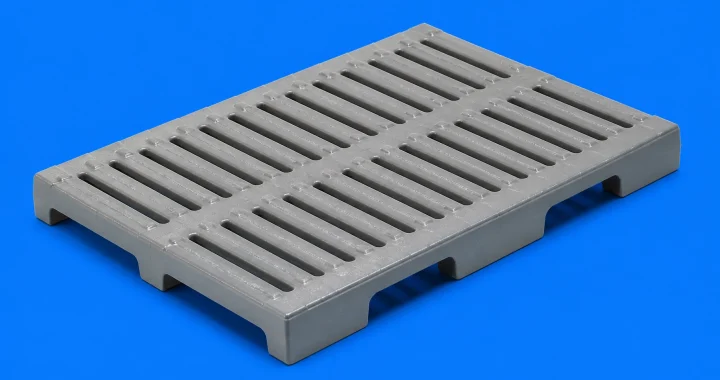
System Overview: Canine Containment Flooring
The primary objective of canine containment flooring is the maintenance of a sanitary and dry environment. Substrate selection determines the efficacy of fluid management and microbial control. The following report evaluates ten flooring configurations based on drainage capacity, thermal regulation, and sanitation protocols.
1. Raised High-Density Resin Panels
The implementation of raised high-density plastic resin panels is a recognized method for achieving a "high and dry" state. These panels, such as the Kennel Deck system, utilize a slatted design to facilitate the immediate evacuation of fluids to the subfloor.
The material composition of these panels is non-porous, preventing the absorption of urine or cleaning agents. A non-skid surface texture is integrated to maintain traction during high-moisture events. Air circulation is promoted beneath the panel, which assists in the evaporation of residual moisture and the mitigation of odor-causing bacteria.

2. Sealed Concrete with Sloped Gradients
Concrete is frequently utilized as a base substrate in commercial kennel operations. For optimal performance, the concrete must be finished with a slope of at least 0.25 inches per foot toward a centralized or trench-style drain.
Unsealed concrete is highly porous and subject to the infiltration of biological waste. To prevent system failure, a non-porous sealant must be applied. This creates a barrier that prevents liquid penetration and allows for pressurized water sanitation. However, concrete possesses high thermal conductivity, which may result in excessive heat loss from the canine subject during low-temperature cycles.
3. Non-Porous Rubberized Matting
Rubberized mats are deployed to provide orthopedic support and thermal insulation. These mats are typically manufactured from recycled tire rubber or virgin vulcanized rubber.
When utilized over a sloped concrete floor, rubberized matting increases the coefficient of friction, reducing the risk of musculoskeletal injury due to slipping. For sanitation, mats must be removed periodically to address fluid accumulation at the interface between the mat and the subfloor. Failure to maintain this interface results in anaerobic bacterial growth and increased odor emissions.
4. Synthetic Pet Turf with Permeable Backing
Synthetic turf systems simulate natural grass while providing a higher degree of sanitation control. A permeable backing is required to allow urine to pass through the fibers into a drainage layer, typically comprised of crushed stone or a dedicated drainage grid.
Sanitation of synthetic turf requires the use of specialized enzymatic cleaners to break down organic matter trapped within the fibers. Maintenance cycles must be strictly followed to prevent the accumulation of solid waste debris. In high-traffic scenarios, fiber compaction may occur, necessitating mechanical brushing to restore drainage flow.

5. PVC Grid Drainage Tiles
Interlocking PVC tiles are used to create a modular raised floor. The open-grid geometry allows for the passage of solid and liquid waste.
PVC is resistant to a wide range of chemical disinfectants, including dilute bleach solutions. The modular nature of these tiles allows for the replacement of individual sections in the event of mechanical failure or localized degradation. However, the numerous interlocking seams can serve as collection points for fine debris, requiring detailed cleaning protocols.
6. Galvanized Steel Grated Platforms
In veterinary and clinical settings, galvanized steel or plastic-coated wire grates are utilized for short-term containment. These systems provide the highest rate of fluid evacuation.
Steel grates are often integrated into specialized equipment, such as floor grates for steel tubs. While highly effective for drainage, prolonged exposure to metal grates may result in pododermatitis or other paw-related pathologies if the gauge of the wire is insufficient to distribute the subject's weight. Regular inspection for coating integrity is required to prevent oxidation and corrosion.
7. Compacted Pea Gravel Aggregate
Inorganic aggregate, such as pea gravel, is an economically viable option for outdoor containment. The void spaces between the stones facilitate gravity-assisted drainage into the soil substrate.
Pea gravel requires a depth of 4 to 6 inches over a layer of landscape fabric to prevent weed intrusion and soil mixing. Sanitation is achieved through rinsing and periodic replacement of the top layer of stone. It should be noted that some canine subjects may ingest the aggregate, leading to gastrointestinal obstruction. System monitoring is recommended.

8. Composite Resin Planking
Composite boards, comprised of wood fibers and plastic resins, are used to construct elevated platforms. These boards are more resistant to moisture than traditional timber.
The boards are installed with uniform gaps to facilitate drainage. Unlike natural wood, composite materials do not splinter, reducing the risk of integumentary trauma. Maintenance involves the use of standard detergent solutions. Over time, UV exposure may result in thermal expansion and contraction, necessitating the use of flexible fasteners during installation.
9. Industrial Grade Epoxy Coatings
Epoxy and polyurea coatings are applied directly to concrete or wooden subfloors to create a seamless, monolithic surface. These coatings are impervious to liquid penetration.
To maintain safety standards, an aggregate such as quartz or aluminum oxide must be broadcast into the wet coating to provide slip resistance. Epoxy systems are highly durable and can withstand the mechanical stress of heavy cleaning equipment. However, the application process requires specific environmental conditions (temperature and humidity) to ensure proper curing. Error code: COATING_FAILURE_DEBONDING may occur if the substrate is not properly etched prior to application.
10. Stainless Steel Modular Units
For high-intensity environments, such as 9-unit cage banks, stainless steel is the preferred material. It is non-porous, non-corrosive, and capable of withstanding autoclaving or steam cleaning.
Stainless steel units are often designed with integrated troughs and drains. This allows for the containment and evacuation of fluids within a closed-loop system. While the initial capital expenditure is high, the lifecycle cost is minimized due to the material's extreme durability and resistance to chemical degradation.

Maintenance and Sanitation Protocols
To ensure the continued operation of any flooring system, a standardized sanitation schedule must be implemented.
Daily Operational Procedures:
- Removal of solid biological waste.
- Application of low-pressure water to move liquid waste toward drainage points.
- Inspection for mechanical damage or surface wear.
Weekly Maintenance Procedures:
- Application of broad-spectrum disinfectants.
- Scrubbing of high-contact zones.
- Verification of drainage flow and removal of obstructions.
System status: OPERATIONAL when the floor surface remains "high and dry" following a sanitation cycle. Failure to adhere to these protocols may result in biological contamination and system degradation.