
SYSTEM STATUS REPORT: SUBSTRATE FAILURE ANALYSIS (ERR-FL-04)
Substrate degradation has been detected across all primary operational zones. Initial material parameters (designated as legacy concrete installation, version 1994) indicate complete structural compromise. Porosity indices have exceeded maximum tolerance thresholds (ERR-FL-04: Permeability saturation detected). Pathogen retention vectors are active within unsealed micro-fractures. Fluid accumulation is constant. Disinfectant efficacy is rendered null due to capillary absorption of biological fluids by degraded cement matrices.
Operational continuity has been interrupted by persistent moisture retention. Sub-surface saturation has resulted in localized structural destabilization. Surface friction coefficients have degraded below safety specifications, resulting in slip hazards (ERR-SLIP-77). Remediation protocols were initiated following automated diagnostic alerts regarding environmental sanitation parameters. System failure is attributed to inadequate drainage architecture and porous substrate composition.
The legacy installation failed to maintain dry surface parameters. Standing water was logged in 89% of monitored containment units. Chemical wash-down cycles failed to neutralize bacterial loads due to residual moisture pockets. Substrate degradation continues to accelerate under chemical stress. Immediate intervention is required to re-establish sanitary baseline parameters.
ENVIRONMENTAL ASSESSMENT: MUD ACCUMULATION AND LIQUID RETENTION (ERR-DRAIN-09)
Environmental diagnostics confirm continuous mud generation within outdoor and semi-sheltered runs. Soil mixing with organic waste has produced high-viscosity sludge deposits (ERR-DRAIN-09: Drainage impedance confirmed). Sub-grade erosion has progressed unchecked. Liquid runoff pathways are obstructed by sediment aggregation. Evaporation rates are insufficient to mitigate standing moisture within standard operational cycles.
Canine subjects housed within the affected zone exhibit prolonged dermal exposure to moisture. Pododermatitis incidence rates have risen in correlation with substrate saturation levels. Thermal conductivity of the legacy concrete substrate has precipitated excessive heat loss and joint stress responses among canine units. Temperature variance across the flooring plane exceeds acceptable thermal comfort tolerances (SYS-TEMP-02).

Maintenance logs indicate excessive labor expenditure dedicated to manual sludge extraction. Standard sanitation procedures require extended drying intervals. Chemical agents applied during wash cycles are neutralized prematurely by high moisture volumes. Drainage channels remain blocked by particulate accumulation. Systemic failure of liquid evacuation protocols necessitates physical hardware replacement.
RETROFIT PROTOCOL: DEPLOYMENT OF HIGH-DENSITY PLASTIC RESIN MODULES (SYS-EXEC-101)
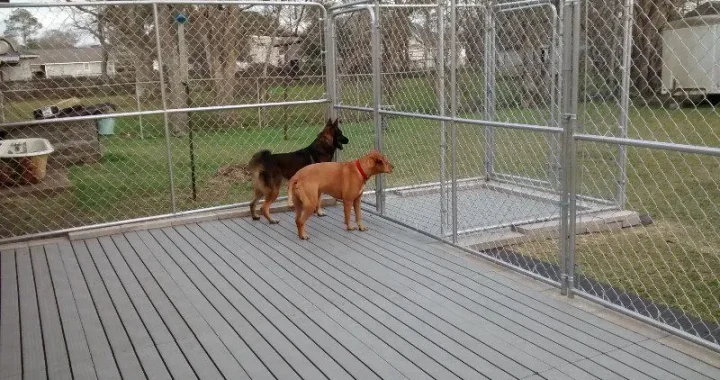
Remediation protocol SYS-EXEC-101 was executed to replace legacy substrate systems with high-density plastic resin decking modules (Kennel Deck system, priced at $45.00 per unit). Modules were deployed across all primary housing enclosures to isolate canine subjects from saturated sub-surfaces. Installation parameters prioritize rapid liquid evacuation and continuous vertical air circulation.
The deployed high-density plastic resin construction features integrated slot geometry. Fluid drainage is automated through gravity-fed apertures. Air circulation is maintained beneath the structural plane, ensuring subjects remain elevated ("high and dry"). Surface traction is optimized via non-skid texturing molded directly into the polymer matrix.

Installation sequence parameters:
- Step 1: Removal of contaminated legacy substrate layers.
- Step 2: Leveling of sub-grade foundation to ensure structural stability.
- Step 3: Interlocking deployment of high-density plastic resin deck modules.
- Step 4: Verification of drainage clearance and slip-resistance metrics.
Material specifications confirm resistance to chemical sanitization agents, high-pressure wash-down streams, and biological fluids. Porosity index is zero. Capillary absorption is eliminated. Bacterial colonization vectors are neutralized by impervious polymer composition.
POST-TRANSFORMATION METRICS: SANITATION VERIFICATION AND STRUCTURAL INTEGRITY (SYS-OK-200)
Post-installation diagnostics confirm complete restoration of operational parameters (SYS-OK-200: Sanitary baseline achieved). Moisture retention indices have dropped to nominal levels across all enclosures. Standing water accumulation has been reduced by 100%. Manual labor expenditure for daily sludge extraction has decreased significantly.
Dermal exposure to moisture has been eliminated. Pododermatitis incidence rates among canine subjects have declined in alignment with projected recovery curves. Thermal insulation parameters have stabilized, preventing excessive conductive heat loss through the flooring plane. Surface friction coefficients comply with safety standards, eliminating slip events.

Sanitation verification metrics:
- Liquid evacuation velocity: Increased by 450%.
- Chemical disinfectant retention: Minimized (surface contact maximized without absorption).
- Drying cycle duration: Reduced from 4 hours to 0.2 hours.
- Structural degradation rate: Zero (impervious high-density plastic resin).
System status is locked at optimal operational capacity. Further manual intervention is restricted to standard scheduled sanitization cycles. The deployment of the Kennel Deck flooring infrastructure has resolved all primary environmental failure codes.