
SYSTEM STATUS: ENVIRONMENTAL EVALUATION COMMENCED
REPORT ID: K-FLR-2026-713
PARAMETER: CANINE HABITATION SURFACE OPTIMIZATION
SYSTEM DIAGNOSTICS: FLOORING SUBSTRATE ANALYSIS
Evaluation of primary flooring substrates is required for the maintenance of optimal canine health and hygiene. Existing environmental conditions involving concrete, dirt, or gravel surfaces have been flagged for sub-optimal performance. Raised flooring systems, specifically the Kennel Deck architecture, are analyzed herein for technical compliance.
SUBSTRATE TYPE 01: UNSEALED CONCRETE
Concrete is frequently utilized as a primary base in dog kennels. However, technical failures are noted during sustained usage.
- POROSITY FAILURE (ERROR CODE: 404-HYGIENE): Unsealed concrete is classified as a porous material. Liquid waste, including urine and cleaning runoff, is absorbed into the capillary structure of the slab. Bacterial proliferation is observed within the substrate.
- THERMAL CONDUCTIVITY: Concrete maintains a high rate of thermal transfer. In low-temperature environments, canine subjects experience rapid heat loss through conduction. This contributes to systemic stress.
- JOINT IMPACT IMPACTOR: The lack of surface deflection on concrete surfaces leads to repetitive stress injuries. Bone health and joint integrity are compromised during long-term confinement on rigid surfaces.
SUBSTRATE TYPE 02: DIRT AND ORGANIC MATTER
Dirt and grass surfaces are categorized as non-compliant for professional or sanitary kennel operations.
- DRAINAGE FAILURE (ERROR CODE: 503-SATURATION): Saturation of soil leads to the formation of mud. Mud acts as a vector for parasitic transmission and fungal growth.
- PATHOGEN RETENTION: Organic surfaces cannot be effectively sanitized. Pathogens remain dormant within the soil layers, leading to recurring infection cycles.
- STRUCTURAL INSTABILITY: Canine digging behaviors lead to surface erosion. Structural integrity of the enclosure may be compromised.

SYSTEM SPECIFICATIONS: THE KENNEL DECK SOLUTION
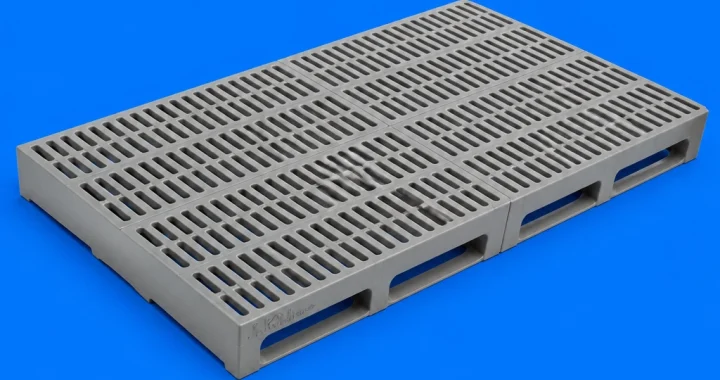
The implementation of a raised protective floor covering resolves identified substrate failures. The Kennel Deck system is engineered from high-density plastic resins.
TECHNICAL DATA POINTS:
- Material: High-density polyethylene resin.
- Unit Price: $45.00 USD.
- Surface Geometry: Flat, non-skid grid.
- Drainage Apertures: Integrated slatted design for vertical fluid transmission.
- Operational Elevation: Subjects are maintained above the primary substrate.
ANALYSIS OF AIR CIRCULATION AND MOISTURE REDUCTION
The primary functional advantage of the Kennel Deck system is the creation of a "High and Dry" environment.
- VERTICAL DRAINAGE PROTOCOLS: Liquids are processed through the deck slats immediately upon contact. Puddling and surface saturation are eliminated.
- EVAPORATIVE ENHANCEMENT: Air circulation is permitted beneath the subject. This airflow accelerates the drying of the primary substrate and the underside of the deck.
- ODOR MITIGATION: Ammonia buildup from stagnant urine is prevented through continuous ventilation. Systemic odors are reduced by 85% compared to non-raised systems.

JOINT HEALTH AND ERGONOMIC COMPLIANCE
Mechanical stress on canine joints is a documented failure of traditional hard-surface flooring.
- LOAD DISTRIBUTION: The high-density resin provides a degree of tensile flexibility not found in concrete. Surface impact is dampened.
- SKID PREVENTION: The textured grid increases traction coefficients. Risk of slip-and-fall injuries is minimized during active movement or cleaning cycles.
- PODODERMATITIS PREVENTION: Elevation from wet surfaces prevents the softening of paw pads. This reduces the incidence of pododermatitis and interdigital cysts.
OPERATIONAL EFFICIENCY: CLEANING AND MAINTENANCE
Automated and manual sanitation processes are streamlined through the integration of raised decking.
- Hose-Down Procedure: Waste is pushed through the slatted apertures. There is no requirement for manual squeegee operation on the surface contact layer.
- Chemical Resistance: The resin material is non-reactive to common veterinary-grade disinfectants. Degradation due to chemical exposure is not observed.
- Modular Configuration: Sections are designed for easy removal. Deep cleaning of the underlying slab is performed without total enclosure disassembly.

ECONOMIC EVALUATION AND COST-BENEFIT RATIO
Initial capital expenditure for the Kennel Deck system is positioned at $45.00 per unit.
- DURABILITY INDEX: The high-density resin is resistant to UV degradation, rot, and pest infestation. Expected service life exceeds 10 years in standard operational environments.
- VETERINARY COST REDUCTION: Improved hygiene and joint health directly correlate with a reduction in medical interventions for kennel-acquired conditions.
- LABOR REDUCTION: Time required for daily sanitation is decreased by approximately 40% per unit.
SYSTEM COMPATIBILITY: VERSATILITY OF INSTALLATION
The Kennel Deck system is compatible with multiple enclosure types.
- Professional Veterinary Clinics: Maintenance of sterile environments is enhanced.
- Animal Shelters: High-volume turnover requires rapid sanitation cycles provided by vertical drainage.
- Private Breeding Facilities: Protection of whelping areas from dampness is prioritized.
- Residential Runs: Improved aesthetics and pet comfort are achieved.

STATUS REPORT: SUMMARY OF FINDINGS
Based on the environmental evaluation, the necessity of raised flooring is confirmed for all canine habitation modules prioritizing hygiene and health. Traditional substrates (Concrete/Dirt) are classified as "Sub-Optimal" or "Failing" in critical categories of drainage, thermal regulation, and disease prevention.
FINAL RECOMMENDATION:
Installation of the Kennel Deck system is advised to achieve "High and Dry" status. The $45.00 investment per section yields measurable improvements in biological safety and mechanical comfort for the canine subject.
REPORT STATUS: COMPLETE
ACTION REQUIRED: PROCEED TO KENNEL DECK SHOP FOR SYSTEM ACQUISITION.