
SYSTEM STATUS: OPERATIONAL OVERVIEW
The maintenance of a canine containment environment requires the integration of efficient drainage protocols. Drainage is defined as the systematic removal of liquids and suspended solids from the primary floor surface. Failure to execute proper drainage leads to the accumulation of biological waste and moisture. These factors contribute to secondary system failures in hygiene and animal health.
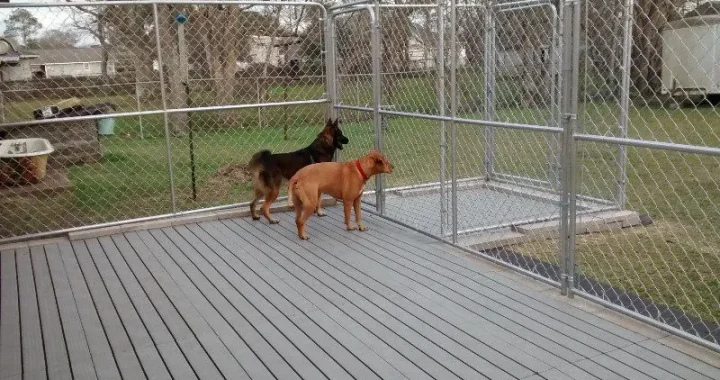
The implementation of a Kennel Deck system is identified as a primary solution for liquid management. High-density plastic resin components are utilized to elevate the subject above the substrate. This elevation facilitates the movement of fluids away from the contact surface.
ERROR_CODE_01: SUBSTRATE_SATURATION
Substrate saturation occurs when the flooring material absorbs or retains liquids. Porous surfaces such as concrete, dirt, or wood are susceptible to this failure.
- Concrete Porosity: Unsealed concrete acts as a reservoir for urine and wash water. Micro-pores within the material harbor bacteria. These bacteria produce odors and pathogens that cannot be neutralized by surface-level cleaning.
- Dirt and Gravel: These materials are classified as "impossible to disinfect." Moisture is retained within the earth, creating a perpetual state of dampness. This condition is incompatible with sanitary requirements.
- Moisture Retention: Inadequate drainage results in standing water. Standing water facilitates the growth of mold and mildew.
To mitigate ERROR_CODE_01, a nonporous barrier must be established. The original Kennel Deck provides a non-absorbent surface that prevents liquid penetration.

ERROR_CODE_02: BIOLOGICAL_WASTE_ACCUMULATION
Biological waste accumulation is the presence of urine, feces, and organic debris on the primary flooring surface. If waste is not removed via gravity-assisted drainage, the following consequences are recorded:
- Dermatological Irritation: Continuous contact with moisture and waste leads to skin degradation in canine subjects.
- Pathogen Proliferation: Wet environments optimize the reproduction of viruses and bacteria.
- Olfactory Contamination: Accumulated ammonia from urine produces noxious odors that permeate the facility.
The removal of biological waste is automated through the use of slatted flooring designs. Fluids are passed through the system's apertures, directed by gravity toward the underlying drainage infrastructure.
COMPONENT SPECIFICATION: KENNEL DECK ARCHITECTURE
The Kennel Deck is engineered with specific technical parameters to optimize drainage.
| Parameter | Specification | Function |
|---|---|---|
| Material | High-Density Plastic Resin | Prevent absorption and chemical degradation |
| Surface Type | Non-Skid / Flat | Ensure animal stability and comfort |
| Construction | Slotted / Slatted | Facilitate vertical fluid transfer |
| Dimensions | 2' x 4' | Standardized modular installation |
| Elevation | Raised | Separation of animal from waste flow |
The material is resistant to disinfectants and environmental stressors. The flat surface is optimized for paw health, preventing the structural fatigue associated with wire or irregular mesh surfaces.

INSTALLATION PROTOCOL: DRAINAGE OPTIMIZATION
For the Kennel Deck system to function at maximum efficiency, the underlying substrate must be configured correctly. The following technical requirements are mandatory for professional installations:
Substrate Slope Requirements
Floors must be uniformly sloped toward the drainage point. A slope of 1% to 2% is required to prevent water ponding. If the slope is less than 1%, liquid velocity is insufficient to carry suspended solids. If the slope exceeds 2%, animal stability may be compromised.
Drainage Point Configuration
Two primary drainage configurations are utilized in kennel design:
- Trench Drains: Located at the rear or front of the run. Water is directed toward a pre-sloped channel. This is the preferred configuration for high-volume cleaning.
- Point Drains: A central or corner-mounted drain. The floor must be sloped from all perimeters toward this single point.
Plumbing Integration
All kennel runoff must be directed to a sanitary sewer system. Connection to storm drains is prohibited by regulatory codes. Drain pipes should have a minimum diameter of 3 inches, though 4 inches is recommended to prevent blockage from hair and debris. Hair strainers must be installed at all drainage outlets to maintain system flow.
MAINTENANCE CYCLE: HYGIENE MAINTENANCE
A recurring maintenance cycle is required to ensure system longevity and sanitary compliance. The maintenance protocol consists of the following steps:
- Solid Waste Removal: Feces must be manually removed prior to liquid application. Solid waste should not be introduced into the liquid drainage system.
- Hydraulic Flushing: A low-pressure spray is applied to the Kennel Deck surface. Water passes through the slots, rinsing the underside and the substrate.
- Disinfectant Application: Chemically compatible disinfectants are applied. The nonporous nature of the resin ensures that the disinfectant remains on the surface for the required contact time before drainage.
- Air Circulation: The raised design of the deck permits air movement beneath the panels. This facilitates rapid drying and prevents the development of stagnant humidity.

SYSTEM CONSTRAINTS AND LIMITATIONS
Users are advised of the following technical constraints regarding the drainage system:
- Constraint 01: The system is designed for gravity-assisted drainage. If the substrate is level (0% slope), the system will fail to remove fluids effectively.
- Constraint 02: Excessive accumulation of hair or large debris in the slots will restrict drainage. Regular cleaning is mandatory.
- Constraint 03: The system must be placed on a firm surface. Installation on shifting or uneven terrain will cause panel misalignment, disrupting the uniform surface.
TECHNICAL SUMMARY
The integration of Kennel Deck flooring into a kennel environment serves to mitigate the risks associated with inadequate drainage. By elevating the animal and providing a nonporous, slotted surface, the system ensures that moisture and waste are efficiently removed from the immediate environment.
Failure to adhere to the installation protocols, specifically substrate slope and plumbing diameter, will result in suboptimal performance. The utilization of high-density resin panels is confirmed as a standard procedure for maintaining hygienic status in professional canine facilities.

For technical procurement or additional system specifications, refer to the Kennel Deck shop.