
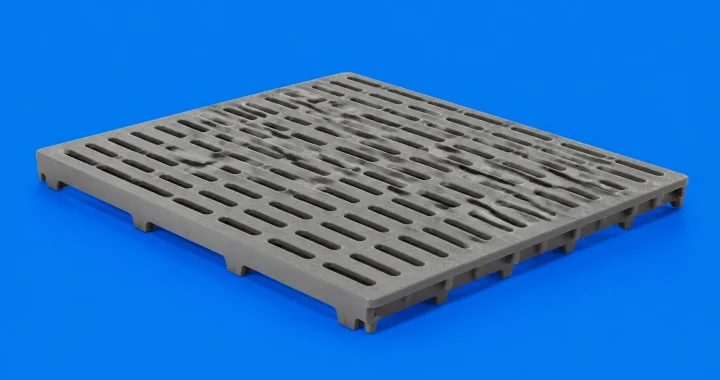
SYSTEM OVERVIEW: KENNEL SUBSTRATE EVALUATION
The selection of flooring material for canine containment systems is a critical factor in maintaining operational hygiene and animal health. This report evaluates the performance specifications of traditional concrete slabs versus high-density plastic resin systems, such as the Kennel Deck. Data points analyzed include porosity, thermal conductivity, orthopedic impact, and drainage efficiency.
PERFORMANCE REPORT: CONCRETE FLOORING
Concrete is a composite material composed of fine and coarse aggregate bonded together with a fluid cement that hardens over time. In kennel environments, concrete is frequently utilized due to its structural mass and perceived durability. However, several technical failures are associated with this substrate.
POROSITY AND BIOLOGICAL ACCUMULATION
Concrete is inherently porous. At a microscopic level, the material contains a network of capillary voids. When untreated or when surface sealants fail, these voids serve as reservoirs for moisture, urea, and bacterial pathogens.
- Absorption Failure: Liquid waste is absorbed into the slab.
- Odor Retention: Once biological matter enters the internal matrix of the concrete, standard surface cleaning protocols are insufficient for total removal.
- Chemical Degradation: Frequent application of high-strength disinfectants accelerates the breakdown of topical sealants, exposing the underlying porous structure to further contamination.
THERMAL CONDUCTIVITY AND CANINE KINETICS
Concrete possesses high thermal mass and high thermal conductivity. In cold climates, heat is rapidly conducted away from the animal’s body through the flooring, leading to thermal stress. Conversely, in outdoor environments, solar radiation increases the surface temperature of the slab to levels that may cause thermal injury to canine paw pads.
From an orthopedic perspective, concrete is a non-yielding surface. The lack of elasticity results in high impact forces on the skeletal system. Chronic exposure to non-yielding surfaces is linked to joint degradation and the development of pressure sores (decubitus ulcers) in large-breed or geriatric subjects.

PERFORMANCE REPORT: HIGH-DENSITY PLASTIC RESIN (KENNEL DECK)
High-density plastic resin systems are engineered to address the specific failure points identified in concrete substrates. The Kennel Deck system utilizes a non-porous material configuration to ensure surface integrity and animal comfort.
FLUID DYNAMICS AND DRAINAGE SPECIFICATIONS
The architecture of the plastic resin panel incorporates a slatted design. This configuration facilitates the immediate transit of liquids from the surface to the sub-floor area.
- Surface Tension Management: Liquids are unable to pool on the non-porous resin surface.
- Air Circulation: The raised design allows for 360-degree air movement, which accelerates the evaporation of residual moisture.
- Sanitary State: The "high and dry" state is maintained consistently, reducing the risk of skin infections and moisture-associated dermatitis.
MATERIAL SPECIFICATIONS AND DURABILITY
The resin utilized is a high-density polymer designed to resist chemical erosion and mechanical wear. Unlike concrete, the material does not crack or spall when exposed to freeze-thaw cycles.
| Technical Specification | Concrete Slab | Kennel Deck Resin |
|---|---|---|
| Porosity | High (0.1 – 0.2) | Nil |
| Odor Absorption | Systematic | Inhibited |
| Surface Texture | Variable/Slippery when wet | Non-skid Molded Texture |
| Thermal Insulation | Low | Moderate/High |
| Installation Complexity | High (Labor Intensive) | Low (Modular) |
COMPARATIVE ANALYSIS: HYGIENE AND MAINTENANCE
Operational efficiency in professional kennels, veterinary clinics, and shelters is measured by the time and resources required to maintain a sanitary environment.
CLEANING PROTOCOLS
Concrete maintenance requires a multi-stage process involving saturation, scrubbing, and thorough drying. If the drying phase is incomplete, the residual moisture within the pores facilitates the growth of mold and mildew.
The Kennel Deck system simplifies the maintenance cycle. The non-porous surface is cleaned via high-pressure water application or standard disinfectant spraying. Because the material does not absorb fluids, the "clean-to-dry" time is significantly reduced. The panels can be removed for periodic deep cleaning of the sub-floor area, a process that is impossible with a permanent concrete installation.

ORTHOPEDIC IMPACT AND COMFORT ANALYSIS
The physical wellbeing of the canine is a primary operational objective. Surface hardness is a critical variable in this analysis.
PRESSURE DISTRIBUTION
Concrete provides no shock absorption. When a canine enters a recumbent position, the pressure is concentrated on bony prominences such as the elbows and hocks. In contrast, high-density resin panels offer a degree of flex. This elasticity allows for a more equitable distribution of body weight, reducing the mechanical stress on joints.
TRACTION AND SLIP RESISTANCE
Concrete surfaces become hazardous when wet, especially if polished or worn smooth by foot traffic. The Kennel Deck features a molded, non-skid surface. This texture is engineered to provide mechanical traction for canine claws and paw pads, reducing the incidence of slip-and-fall injuries.
LOGISTICS AND OPERATIONAL FLEXIBILITY
The installation and lifecycle of kennel flooring must be considered within the context of facility management.
INSTALLATION PARAMETERS
The installation of a concrete floor is a permanent modification. It requires site preparation, formwork, pouring, and a curing period. Any errors in the slope or drainage of the concrete are difficult and expensive to rectify post-cure.
The plastic resin system is modular. Each panel (typically 2' x 4') can be configured to fit any enclosure size. No specialized labor or heavy machinery is required for deployment. The system can be installed over existing concrete, dirt, or gravel, effectively retrofitting a substandard floor into a high-performance sanitary surface.
SYSTEM MOBILITY
Concrete is stationary. If a facility is relocated or reconfigured, the investment in flooring is forfeited. The Kennel Deck system is portable. Panels can be disassembled and redeployed in a new location or adjusted to meet changing capacity requirements.

ERROR ANALYSIS: COMMON SYSTEM FAILURES
Failure to implement adequate flooring solutions results in secondary system failures:
- Failure Code 101: Persistent Odor. Caused by urea absorption into concrete pores.
- Failure Code 102: Dermatological Stress. Caused by prolonged contact with wet, bacteria-laden surfaces.
- Failure Code 103: Orthopedic Degradation. Caused by long-term housing on non-yielding substrates.
Implementation of the Kennel Deck system mitigates these failure codes by providing a non-absorbent, raised, and cushioned surface.
FINAL SYSTEM STATE: RECOMMENDATION
Based on the technical data presented, high-density plastic resin flooring is the superior substrate for kennel environments. Concrete fails to provide the necessary hygiene, comfort, and flexibility required for modern canine care. The Kennel Deck system offers an optimized solution that ensures dogs remain "high and dry" while maintaining a flat, non-skid, and easily sanitized surface.

For facility upgrades or new installations, the transition to a resin-based modular system is recommended to ensure peak operational performance and animal health.