
STATUS REPORT: DRAINAGE SYSTEM MALFUNCTION
The operational efficiency of canine containment facilities is contingent upon the rapid evacuation of liquid waste and cleaning effluents. When fluid stasis occurs, the structural and biological integrity of the environment is compromised. This report details the technical failures identified in standard kennel flooring drainage systems and the requisite corrective actions.
01. INADEQUATE FLOOR GRADIENT AND FLUID POOLING
A primary cause of drainage failure is an insufficient or negative floor slope. For efficient fluid transition, a minimum gradient of 1/4 inch per foot is required. In many installations, the subfloor lacks the precision necessary to direct liquids toward the primary evacuation point.

When the gradient is insufficient, surface tension allows fluids to remain stationary. This state results in "pooling," where urine and wash water accumulate in low spots. Stationary fluids increase the risk of bacterial proliferation and environmental contamination within the dog kennel flooring area.
02. POROUS SUBSTRATE ABSORPTION (UNSEALED CONCRETE)
Concrete is a naturally porous material characterized by a complex network of internal capillaries. If the substrate is not hermetically sealed, it acts as a reservoir for organic liquids. Once fluids penetrate the concrete matrix, they are shielded from standard surface cleaning protocols.
The absorption of urine into the subfloor leads to the emission of volatile organic compounds (VOCs), commonly perceived as foul odors. Over time, the structural integrity of the concrete may be degraded by acidic waste products, necessitating a complete replacement of the outdoor dog kennel flooring.
03. OBSTRUCTION BY CANINE FOLLICULAR DEBRIS
The accumulation of shed hair and dander is a constant mechanical challenge in kennel environments. These biological materials aggregate within drainage channels and strainers, creating physical barriers to fluid flow.

Failure to implement a multi-stage filtration system results in frequent system blockages. Error Code: CLOG-03. This obstruction causes backflow, forcing contaminated water back onto the kennel surface. Regular mechanical removal of follicular debris is a mandatory maintenance requirement for any dog run flooring system.
04. IMPROPER DRAIN ORIENTATION AND SIZING
Drainage units are frequently undersized for the volume of water utilized during high-pressure cleaning cycles. A standard 2-inch floor drain is often insufficient to process the peak flow rates generated by commercial hosing equipment.
Furthermore, point drains located in the center of a kennel unit require complex, four-way floor sloping. This configuration often results in "dead zones" where drainage is incomplete. The utilization of trench drains or perimeter slot drains is the recommended technical alternative for larger containment areas.
05. LACK OF SURFACE ELEVATION (THE 'HIGH AND DRY' REQUIREMENT)
Direct contact between the canine subject and the drainage surface is a secondary failure mode. On solid flooring, the dog is required to occupy the same plane as the transit fluid. This increases the transmission of pathogens via the paws and coat.
A failure to provide a raised flooring solution like the Kennel Deck means the animal is subjected to constant moisture. For optimal health, the subject must be maintained in a state of "high and dry" relative to the drainage plane.
06. CHEMICAL SEALANT DEGRADATION
Epoxy and resinous coatings are subject to mechanical wear and chemical erosion. High-traffic areas experience a thinning of the protective layer, exposing the underlying substrate to moisture. Once the sealant fails, the entire drainage system is considered compromised.
Signs of sealant failure include discoloration, flaking, and a perceptible increase in surface friction. Immediate re-application of industrial-grade coatings is necessary to maintain the non-porous status of the floor.
07. HORIZONTAL LIQUID MIGRATION (SMEARING)
Excessive floor slope can paradoxically contribute to drainage failure by increasing the speed of fluid travel. High-velocity liquid transit causes waste to spread across a wider surface area before reaching the drain: a process identified as "smearing."
Smearing requires an increased volume of cleaning agent and water to remediate, leading to higher operational costs. A balanced gradient is required to ensure that waste is moved efficiently without unnecessary horizontal dispersion.
08. GROUT LINE SEEPAGE IN TILED SYSTEMS
The utilization of tiled surfaces introduces thousands of linear inches of grout. Grout is inherently more porous than the tile itself and is prone to cracking. These fissures serve as conduits for liquid waste to bypass the primary drainage layer and infiltrate the subfloor.
Once moisture is trapped beneath tiles, it remains inaccessible to cleaning agents. This leads to a persistent biological load that cannot be neutralized by surface-level disinfection. Systems with minimal seams are technically superior for kennel applications.
09. BIOFILM ACCUMULATION IN DRAINAGE CHANNELS
Drains that are not subjected to regular mechanical scrubbing develop a biological film known as biofilm. This layer of microorganisms adheres to the interior of pipes and grates, reducing the effective diameter of the drainage path.
Biofilm is highly resistant to standard chemical flushing. It requires targeted enzymatic cleaners or physical agitation to remove. Failure to manage biofilm leads to chronic slow-drainage issues and recurring odors.
10. INCOMPATIBLE CLEANING AGENTS AND SUBSTRATE REACTION
The use of highly acidic or alkaline cleaning solutions can cause a chemical reaction with certain flooring materials. For example, bleach can degrade certain types of rubber mats or unsealed concrete over time.
Chemical degradation creates micro-pitting on the surface, which traps fluids and debris. Selecting pH-neutral, veterinary-grade disinfectants is essential for preserving the functional lifespan of the kennel flooring drainage system.
REMEDIATION PROTOCOL: OPTIMIZING DRAINAGE PERFORMANCE
To rectify the identified failures, a systematic approach to kennel design must be adopted. The following steps are recommended for immediate implementation:
- Subfloor Recalibration: Ensure all surfaces maintain a consistent 1% to 2% gradient toward the drain.
- Filtration Upgrade: Install heavy-duty hair catchers at every primary drainage inlet.
- Substrate Non-Porosity: Utilize high-density plastic resins that do not absorb moisture or organic odors.
- Surface Elevation: Implement a raised flooring system to separate the subject from the liquid transit plane.
SYSTEM OPTIMIZATION VIA KENNEL DECK
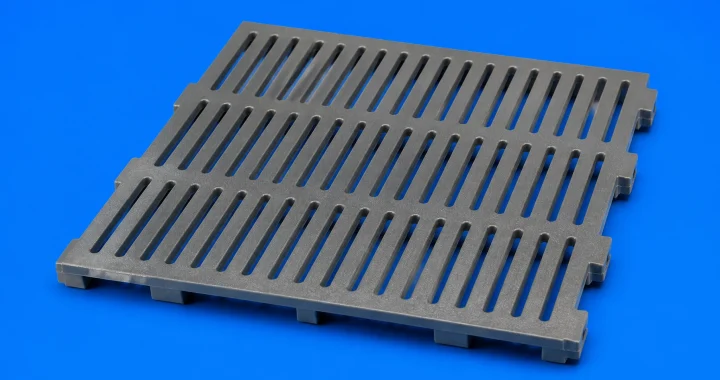
The Kennel Deck system is engineered to solve the primary failure modes of traditional kennel flooring. The high-density plastic resin construction ensures total non-porosity, preventing the absorption of liquids.

The slatted design of each 45.00 USD unit provides a 1-inch elevation, allowing for instantaneous fluid bypass. This configuration maintains the subject in a dry environment while facilitating easy access for cleaning equipment. Air circulation beneath the deck promotes rapid evaporation of residual moisture, further inhibiting bacterial growth.

For facilities requiring a scalable and hygienic flooring solution, the Kennel Deck offers a modular and durable alternative to traditional concrete or dirt floors. By addressing the technical constraints of outdoor dog kennel flooring, the system ensures a high-status operational environment for both professional and residential applications.
FINAL SYSTEM STATUS: OPERATIONAL
Implementing these technical upgrades will restore the drainage system to full capacity. The reduction in moisture retention and organic load will result in a more sanitary and efficient kennel environment.