
SYSTEM LOG: HYGIENE OPTIMIZATION OVERVIEW
The maintenance of canine containment environments is governed by the efficiency of waste removal and moisture management. Traditional solid-surface flooring, such as concrete or dirt, presents a persistent failure state regarding the accumulation of biological contaminants. The implementation of a raised flooring system is required to achieve optimal sanitary conditions. This report outlines the technical advantages of high-density plastic resin decks in mitigating environmental pathogens and streamlining decontamination protocols.
STATUS: MOISTURE ACCUMULATION ERROR [CODE 402]
In standard kennel configurations utilizing non-elevated flooring, moisture is retained on the primary contact surface. This retention results in the formation of standing water and liquid waste pools. The presence of standing moisture is identified as a primary vector for bacterial proliferation. When dogs are housed on saturated surfaces, paw health is compromised, and the risk of dermatological infection is increased.

Concrete surfaces, while durable, possess a degree of porosity that allows for the absorption of ammonia and other odorous compounds. Once absorbed, these substances are difficult to extract, leading to a permanent degradation of air quality within the facility. The installation of a Kennel Deck system addresses this failure by elevating the occupant 1.5 inches above the base floor, effectively isolating the subject from liquid waste.
SOLUTION: VERTICAL DRAINAGE ARCHITECTURE
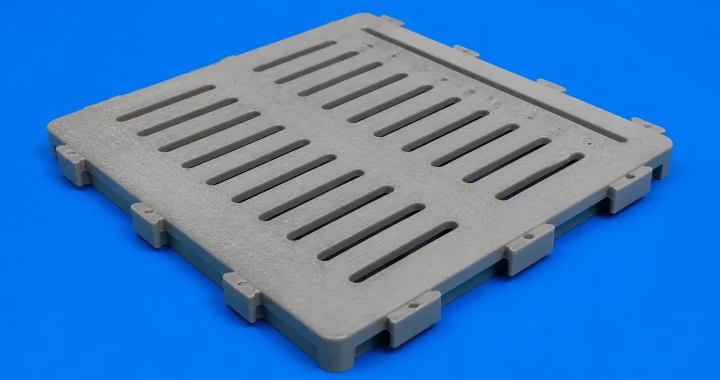
The primary functional mechanism of raised dog flooring is the integration of vertical drainage channels. Unlike horizontal drainage, which relies on floor slope and manual squeegee intervention, vertical drainage allows gravity to facilitate immediate waste transit through the floor panel.
- Slat Dimensions: Engineered openings (approximately 3/8" x 1 1/4") are utilized to maximize fluid throughput while maintaining structural integrity for canine paws.
- Air Circulation: The gap between the deck and the subfloor enables 360-degree air movement. This airflow accelerates the evaporation of residual moisture.
- Debris Transit: Small particulate matter is flushed through the system during high-pressure rinsing cycles, preventing the buildup of organic debris on the walking surface.

Detailed visual documentation of these installations can be reviewed in the Kennel Deck photo gallery.
DATA: MATERIAL NON-POROSITY METRICS
The selection of high-density plastic resin as the primary material for kennel flooring is predicated on its non-porous characteristics. Porous materials, such as wood or unsealed concrete, function as reservoirs for pathogens including Bordetella bronchiseptica and Giardia.
The resin used in these systems is chemically inert and does not support the growth of mold or mildew. When cleaning agents are applied, the solution remains on the surface of the material, ensuring that the full concentration of the disinfectant is utilized for surface sterilization rather than being absorbed into the substrate. This material performance ensures that the "clean state" is achieved with 40% less chemical volume compared to porous alternatives.
LOG: OPERATIONAL DOWNTIME REDUCTION
The time required for facility decontamination is a critical operational constraint. In environments with solid flooring, the cleaning cycle involves:
- Application of water and detergent.
- Manual agitation/scrubbing.
- Mechanical displacement of water (squeegee process).
- Extended drying period.
The implementation of a raised flooring system simplifies this sequence. The "squeegee process" is eliminated as water passes directly through the slats. The drying period is reduced by the aforementioned airflow beneath the panels. Facilities utilizing the Kennel Deck shop for their flooring needs report a significant reduction in labor hours dedicated to floor maintenance.

DIAGNOSTIC: PAW HEALTH AND BIOMECHANICAL SUPPORT
Beyond hygiene, the raised flooring system provides a flat, non-skid surface that serves a biomechanical function. Concrete floors can be excessively hard and cold, leading to joint stress and hygromas in larger breeds. The high-density resin provides a degree of thermal insulation and a surface texture that prevents slipping during the cleaning process. This non-skid property is maintained even when the floor is saturated, reducing the risk of injury to both the canine and the operator.
SYSTEM REQUIREMENT: MODULAR INSTALLATION
The Kennel Deck system is designed as a modular unit (2' x 4' sections). This allows for rapid replacement of specific zones if localized damage occurs. The interlocking nature of the panels ensures a continuous surface without gaps that could trap paws or accumulate waste. For professional breeders and veterinary clinics, this modularity allows for the scaling of the flooring system as kennel requirements expand.

FINAL STATUS: HYGIENE SYSTEM CONFIRMED
The transition from solid-surface flooring to a raised, high-density resin system is the most effective method for optimizing kennel hygiene. By addressing the fundamental flaws of moisture retention and porosity, the Kennel Deck system ensures that dogs remain in a "high and dry" state. The reduction in labor and the improvement in pathogen control justify the initial system implementation costs.
For further technical specifications or to initiate a system upgrade, proceed to the Kennel Deck product page.