
[SYSTEM DIAGNOSTIC: KENNEL SUBSTRATE EVALUATION]
[STATUS: OPERATIONAL]
[DATA INPUT: COMPARATIVE ANALYSIS OF SECONDARY FLOORING INTERFACES]
DIAGNOSTIC OVERVIEW
The selection of a secondary flooring interface for canine containment units is critical for maintaining hygiene and structural integrity. Standard environmental conditions within kennels involve high moisture levels, biological waste accumulation, and repetitive mechanical stress. This report evaluates five substrate options based on drainage efficiency, thermal regulation, and microbial resistance.
EVALUATION 1.0: POROUS CONCRETE SLABS

Standard concrete is frequently utilized as a primary base for kennel structures. However, its performance as an interface surface is categorized by several technical failures. Concrete is inherently porous, allowing for the absorption of moisture and organic pathogens. This absorption leads to the development of persistent odors and the proliferation of bacteria within the internal matrix of the slab.
TECHNICAL SPECIFICATIONS:
- Thermal Conductivity: High. Concrete acts as a thermal sink, reaching sub-optimal temperatures during winter cycles and excessive heat levels when exposed to direct solar radiation.
- Abrasive Coefficient: High. The textured surface of raw concrete induces mechanical wear on canine paw pads and joints, leading to pressure sores and callus formation.
- Drainage Efficiency: Low. Unless a specific grade is maintained, liquid waste remains stationary on the surface, requiring manual intervention for removal.
Concrete systems frequently encounter "Error 404: Comfort Not Found." The lack of elasticity in the material ensures that kinetic energy is returned directly to the subject's skeletal structure during locomotion. While durable, the failure to provide a sanitary or comfortable interface necessitates the application of secondary flooring layers.
EVALUATION 2.0: NON-PERFORATED RUBBER MATTING

Rubber matting is often implemented to mitigate the abrasive failures of concrete. These mats are typically manufactured from recycled tire components or vulcanized virgin rubber. While these materials offer improved shock absorption, they introduce secondary failures related to moisture management and sanitation.
TECHNICAL SPECIFICATIONS:
- Porosity: Variable. Low-grade rubber can absorb liquid waste, resulting in chemical degradation of the material over extended durations.
- Mass: High. Standard stall mats weigh between 50 and 100 lbs per unit, complicating maintenance protocols that require cleaning beneath the surface.
- Interlock Integrity: Low. Seams between mats allow for the migration of liquid waste to the sub-floor, creating anaerobic zones for bacterial growth.
If moisture is trapped beneath non-perforated mats, a "System Failure: Odor Protocol" is initiated. The lack of air circulation ensures that the sub-floor remains perpetually damp. Regular removal of these heavy components is required to maintain a sterile environment, increasing labor overhead. Rubber matting provides a localized improvement in comfort but fails to address the requirement for efficient drainage.
EVALUATION 3.0: AGGREGATE PEA GRAVEL SYSTEMS
Pea gravel and other loose aggregate systems are utilized in outdoor containment units to facilitate drainage. These systems rely on the interstitial spaces between stones to allow liquid waste to percolate into the soil. While effective for drainage, aggregate systems fail to provide a stable or sanitary surface for long-term use.
TECHNICAL SPECIFICATIONS:
- Stability Index: Low. Mechanical displacement occurs during canine movement, leading to uneven surface heights and the formation of pits.
- Sanitation Efficiency: Critical Failure. Solid waste particles integrate into the aggregate, rendering thorough disinfection impossible without complete replacement of the material.
- Ingestion Risk: Moderate. Foreign body ingestion protocols may be triggered if subjects consume the aggregate components.
Aggregates are subject to "System Reset: Infiltration." Over time, soil and organic matter mix with the gravel, clogging drainage paths and necessitating periodic excavation and replacement. This material is not recommended for high-capacity or professional facilities where a sterile environment is mandated.
EVALUATION 4.0: SYNTHETIC FIBER SYSTEMS (ARTIFICIAL TURF)

Artificial turf systems utilize synthetic polyethylene or polypropylene fibers to simulate a natural grass environment. These systems are typically installed over a crushed stone base to allow for drainage. While visually consistent with natural environments, turf systems present significant challenges regarding chemical sanitation and heat retention.
TECHNICAL SPECIFICATIONS:
- Microbial Retention: High. The dense fiber structure provides a vast surface area for the adhesion of biological waste.
- Thermal Retention: Critical. Synthetic fibers absorb solar radiation, frequently reaching temperatures exceeding 120°F (48.9°C), which exceeds the safe operational range for canine contact.
- Chemical Resistance: Moderate. Strong disinfectants may degrade the synthetic fibers over time, leading to shedding and loss of structural integrity.
Artificial turf systems often report "Error: Thermal Overload." In outdoor applications, these surfaces require active cooling via irrigation to prevent thermal injury to the subject. Furthermore, the complexity of removing solid waste from the fiber matrix leads to a reduction in overall hygienic status.
EVALUATION 5.0: HIGH-DENSITY RESIN DECKING MODULES (OPTIMAL)

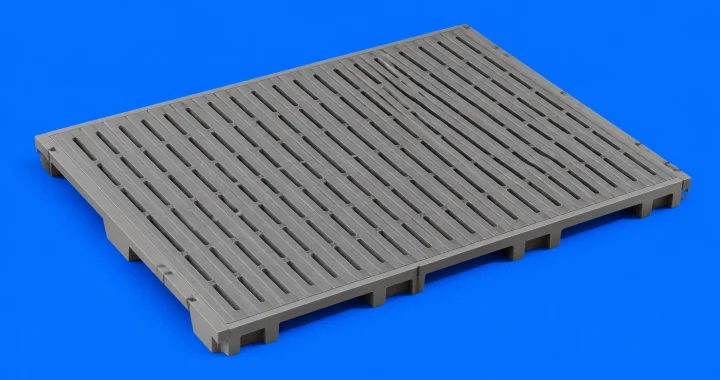
High-density plastic resin decking, specifically the Kennel Deck system, is the recommended technical solution for canine containment flooring. This system utilizes a modular, slatted design to provide a raised flooring surface that isolates the subject from the sub-floor.
TECHNICAL SPECIFICATIONS:
- Material: High-density plastic resin. This material is non-porous and resistant to chemical degradation from cleaning agents and biological waste.
- Dimensions: 2' x 4' sections. Each section is priced at $45.00, providing a scalable solution for various enclosure sizes.
- Drainage Efficiency: Maximum. The 1/2" slots allow for the immediate passage of liquid waste and debris, maintaining a "High and Dry" status for the subject.
- Surface Texture: Non-skid. The flat, non-skid surface provides the necessary traction without the abrasive qualities of concrete.
The Kennel Deck system is engineered to solve the failures identified in previous evaluations. Air circulation is maintained beneath the deck, preventing the accumulation of moisture and odors. The material does not absorb heat to the extent of concrete or turf, maintaining a stable thermal interface.
Installation protocols are simplified due to the modular nature of the panels. Sections can be easily cut to fit specific dimensions and are light enough to be removed for deep-cleaning of the sub-floor if required. The high-density resin prevents the "Error: Absorption" failure seen in wood and concrete substrates, ensuring that the flooring remains sanitary for the duration of its operational life.
CONCLUSION: SYSTEM RECOMMENDATION
A comparative analysis of the five evaluated substrates indicates that raised dog flooring systems using high-density resin modules provide the highest performance across all diagnostic categories. Concrete, rubber, aggregate, and turf systems each present critical failures in hygiene, drainage, or thermal regulation.
To achieve an optimal state of cleanliness and comfort, the Kennel Deck system is the designated selection. It provides a flat, non-skid, and sanitary environment that improves the health and happiness of canine subjects.
[REPORT END]
[STATUS: SYSTEM STABILIZED]